Published on Franz Liszt Group, on October 24, 2021. If you want to know how the Story Behind series started, I give details in “Story Behind” Series #1″.
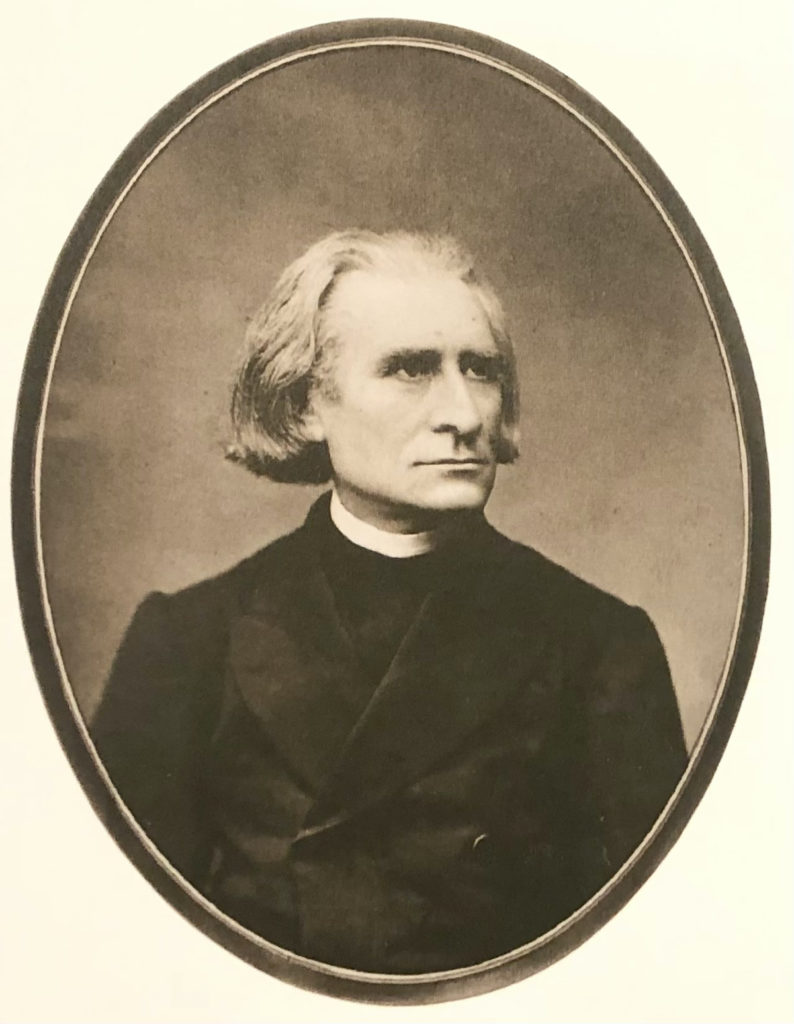
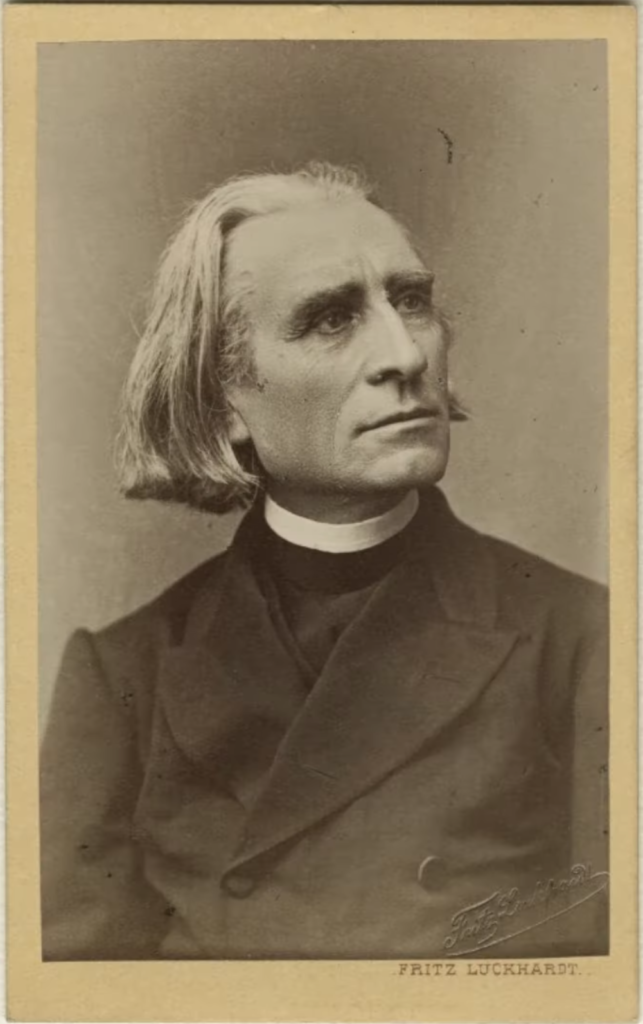
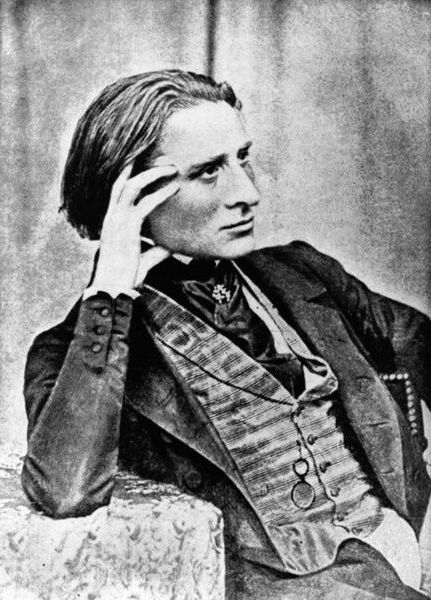
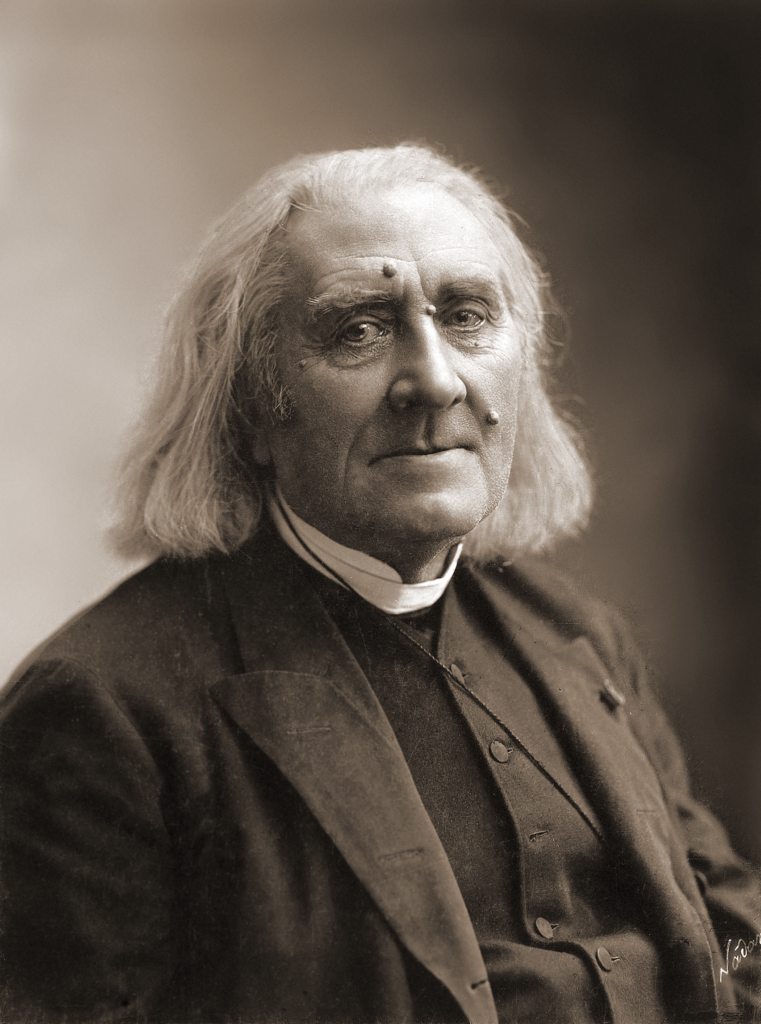
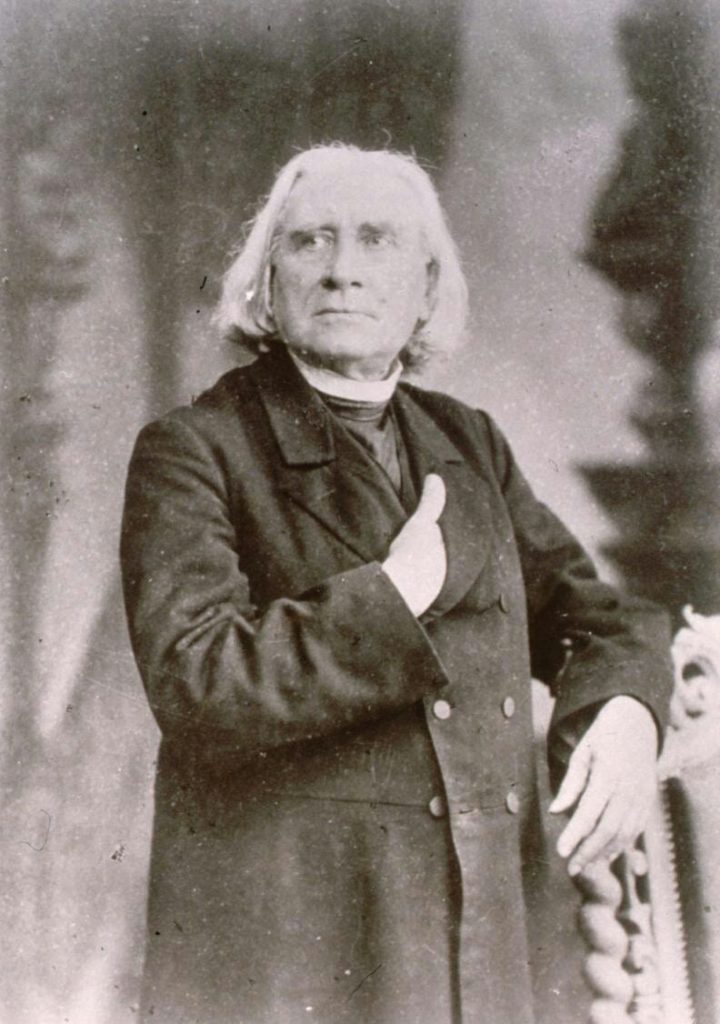
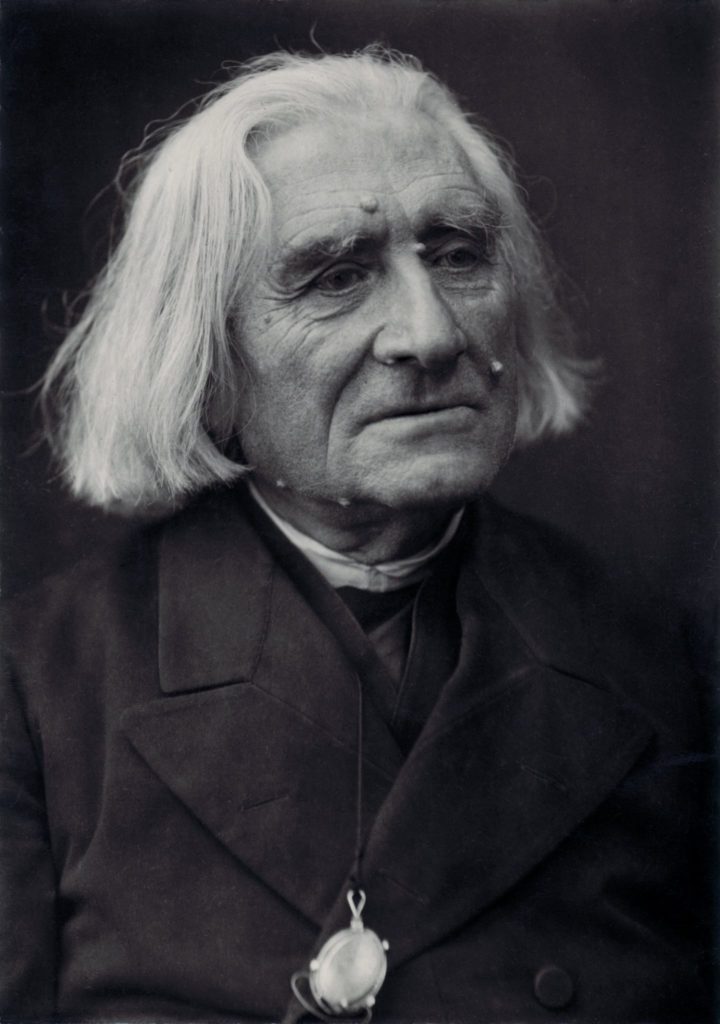
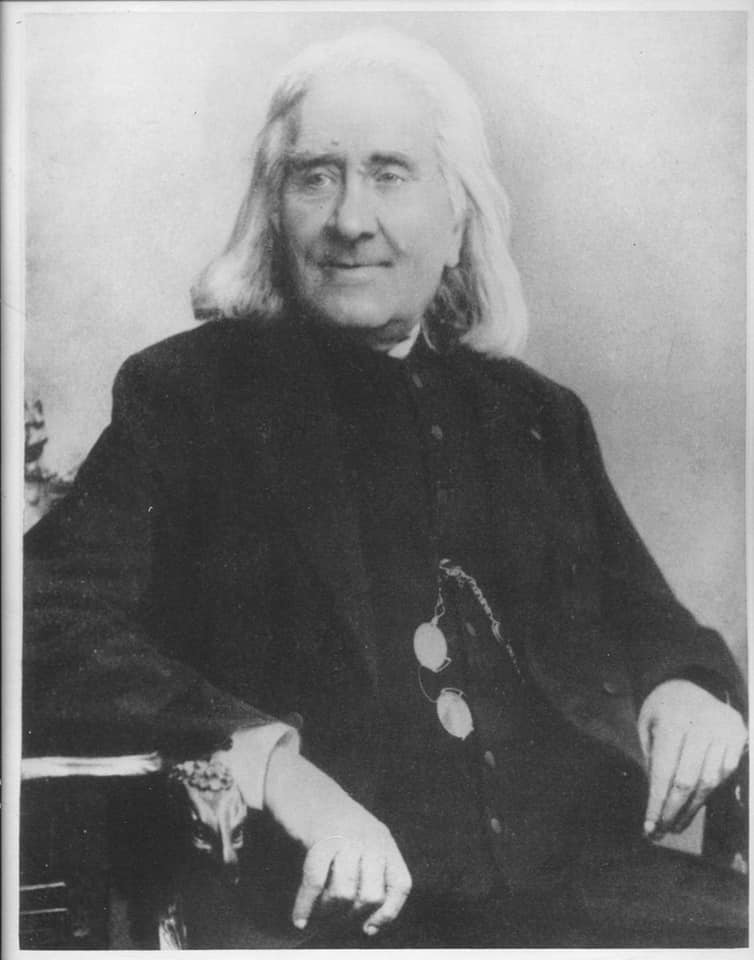
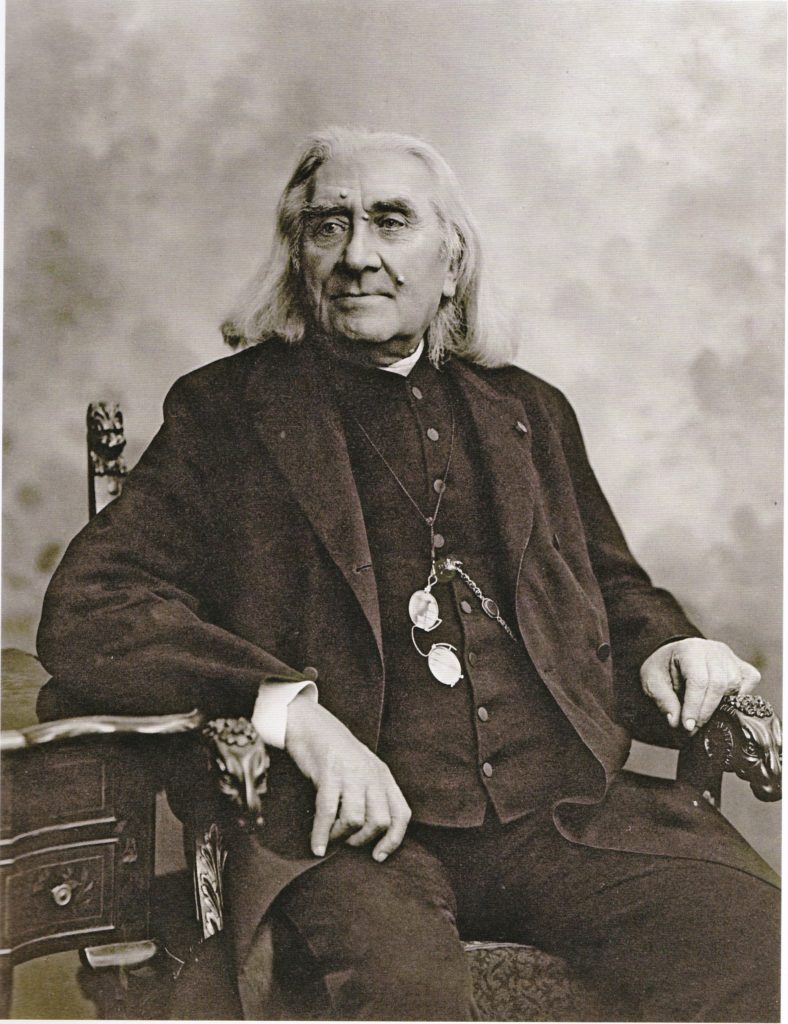
Portrait of Franz Liszt by Fritz Luckhardt in 1871.
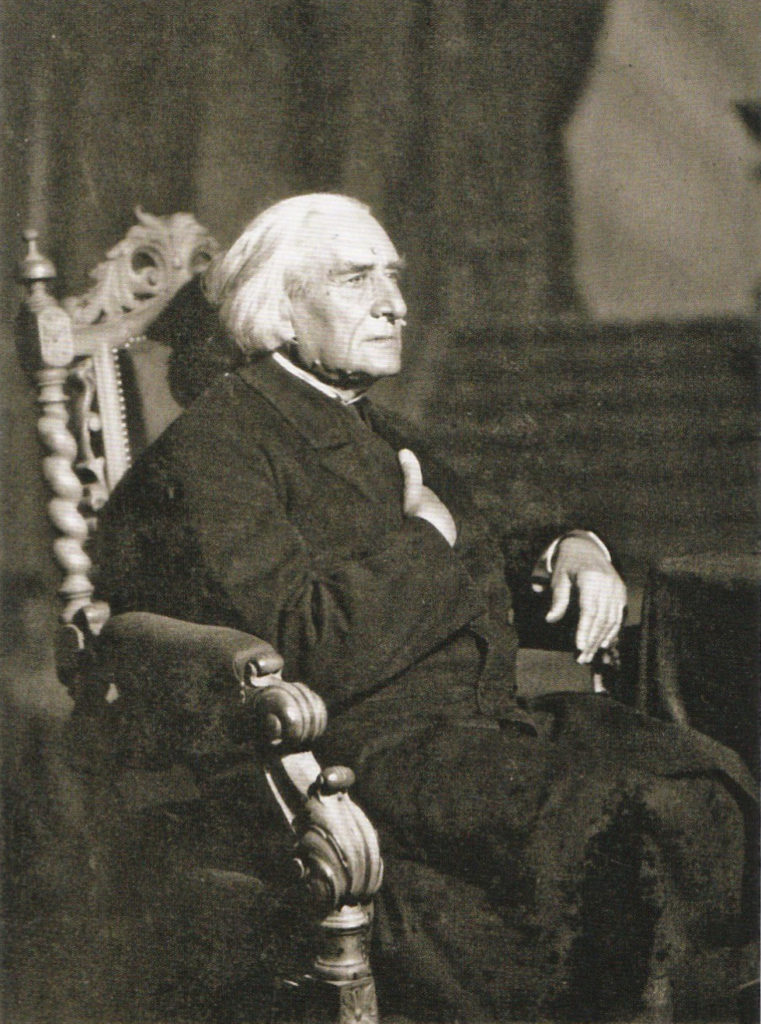
In 1871, the photographer Fritz Luckhardt took a series of pictures of Liszt in Vienna. Here is the story behind these pictures.
From November 1870 to April 1871, following the usual journey of his “vie trifurquée”, Liszt was in Budapest to teach, to attend performances of his works, and to give several charity concerts. In December 1870, he performed during the Beethoven Festival, celebrating the last month of the 100th birthday of Beethoven concerts of the year.
On April 23rd, 1871, he arrived in Vienna. As he was doing each time he was in the Viennese city, he stayed at the Schottenhof, his uncle Franz von Liszt’s place, for some quiet time with his family. It is during this period that Luckhardt took the series of pictures. Luckhardt was known for his portraits of famous personalities of the time. I will give further information about the photographer below.
Liszt left on May 2nd for Prague where he visited Smetana and arrived in Weimar the next day. He stayed in Weimar from May 3rd to the end of August, and then travelled to Rome where he stayed in September and October, and then went to Pest for the remaining of the year. During this last period occurred the issues with Olga Janina, ending up with her threatening of Liszt with a pistol on Nov 25, 1871.
To go back to the picture, it was taken by Fritz Luckhardt, who was born in Kassel, Germany in 1843, and died in Vienna, Austria, in 1894. He moved to Vienna in 1865 to study with the photographer Oscar Kramer, and opened his own studio in 1867. He became famous by using unusual photographic techniques at the time. He took a series of stereo photographs representing portraits of beautiful women between 1868 and 1872. To visualize stereo photographs, a stereoscope had to be used. It is a device allowing to view a stereoscopic pair of separate images, depicting left-eye and right-eye views of the same scene, as a single three-dimensional image. Also, when he opened his studio, he studied with Ludwig Angerer and learned how to use a new printing technique called collotype printing. This process allows high-quality prints from continuous-tone photographic negatives. The process uses heat and cold water-treated gelatin exposed to UV light darkening specific areas of the negative. Thanks to this new technique, he was ordered portraits from many celebrities of the time, including Franz Liszt in 1871.
Liszt was very fond of the series of pictures taken by Luckhardt, especially the one attached. He ordered some prints that served for his personal use and visit cards. Liszt mentioned Luckhardt’s work several times in letters:
to Marie von Sayn-Wittgenstein on January 20th, 1873: “At last the oracle has spoken; here is his answer. His first words concern M. Luckhardt,’ the well-known Viennese photographer, for whom I had insistently requested the gold medallion with the ribbon, as a reward for the well-received homage of my portrait. – Highly successful, they say.”
to his pupil and secretary Alexander Gottschalg on January 2, 1880: “[…] otherwise the so-called anniversary photograph (Pest) is one of my best, as is that of Luckhard [sic] (Vienna), which I find even more pleasant and seems calmer.”
During my research, I found mention to another letter, but I have read it and couldn’t find the excerpt in question. I wonder if the date was incorrectly reported. I tried to match it to the letters published by La Mara but didn’t find more:
to his uncle Eduard von Liszt on January 28th, 1873, it is reported that he mentions the “excellent Luckhardt portrait”.
If someone finds the correct date, please tell me.
Here is another picture from the series used for a visit card:
Published on Franz Liszt Group, on October 13, 2021. If you want to know how the Story Behind series started, I give details in “Story Behind” Series #1″.
Original post:
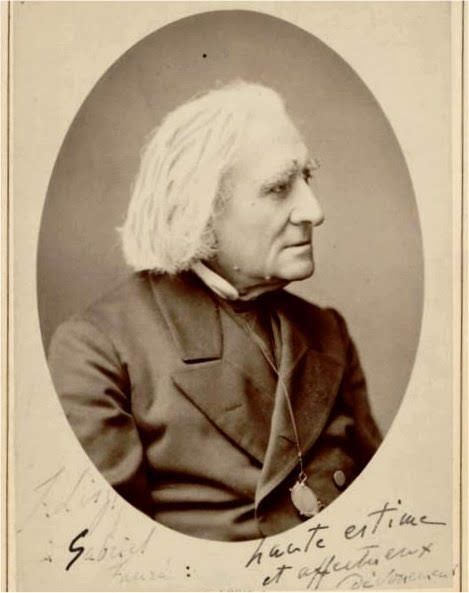
“F. Liszt à Gabriel Fauré, haute estime et affectueux dévouement.”
“F. Liszt to Gabriel Fauré, high esteem and affectionate devotion.”
I didn’t write a new “story behind” since quite a long time so I looked at my collection of pictures to decide on one that has not been posted yet. A few weeks ago, someone posted a 1881 picture on which Liszt had written “Schlechter Componist” (bad composer), taken by Heinrich von Langsdorff in May 1881 in Freiburg im Breisgau. I was ready to post another picture of the same series but the “story behind” has already been told, so I propose this other one from the same month and year but a different photographer.
As you can see, this picture was signed by Franz Liszt for Gabriel Fauré, who he had met through his teacher Camille Saint-Saëns in 1877 when the two French composers visited Liszt in Weimar. Liszt and Fauré stayed in touch and met again when Fauré was attending Wagner’s operas in Bayreuth. The picture was taken in 1881 but signed in July 1882, when Fauré visited Liszt in Zurich. A famous episode about this reunion: when Liszt asked Fauré to show him something he composed, he handed him the score of his Ballade in F♯ major. Liszt sat at the piano and started to play, but stopped after a few bars, telling his young colleague that he had “run out of fingers” and that he should sit and continue to play it, which Fauré did. We will never know if it was a stratagem to hear Fauré play, or if he found the piece too complex.
Now, about the photographer. I already talked about him in previous posts (in May and June) about pictures taken in 1881 and 1882, but I don’t remember telling more about Ganz himself, so here we go. Julien Ganz was a Swiss photographer, son of Johannes Ganz who was also a photographer, who had a studio Bahnhofstrasse 40, Zurich, where Julien was probably taught the basis of his future job. He studied chemistry at the Polytechnic of Zurich and pursued his studies in the University of Jena. He was also a musician, he played the cello. In 1873 he moved to Brussels and purchased a photographic studio 38 Rue de l’Ecuyer, which is the studio in which Liszt was photographed. He worked in Brussels until the end of his life, in 1892. He was exhibited all around the world he won several prices.
Interestingly, Julien Ganz, who was a fan of Liszt, kept a record of the concerts he attended in Antwerp and Brussels, given in the honor of Liszt from May 23 to 31, 1881. This above picture was taken during this period, when Liszt was in Brussels. Ganz notes that the concerts held in his honor in Antwerp included: the Graner Mass, the Piano concerto in E flat major, Totentanz, Les Preludes and the Lieder Mignon, Es muss ein Wunderbares sein, and Wieder möcht’ ich Dir begegnen. The ones in Brussels included: Tasso, Concerto pathétique for two pianos, the Faust-Symphony and the Loreley song.
When I was working on my article about early metronome markings and the A Tempo Project, I discovered James Alexander Hamilton, the translator of Carl Czerny’s Opus 500 (Piano Method) in English. I found out he was quite an interesting person and was surprised not to find him in the Grove Music Online. I wrote a small article about my findings on Hamilton and submitted it to the GMO. It got published on June 24, 2021. Here is an excerpt.
Hamilton, James Alexander (b London, 1785; d London, Aug 2, 1845). English music theorist, translator, and instructor in musical composition, the pianoforte, the organ, and singing. The son of a dealer in old books, his interests in linguistics and music led him to learn foreign languages and translate music theory books. A self-taught multi-instrumentalist, he edited primers in sacred and secular harmony as well as the piano, the organ, singing, and choral singing. His books, issued mostly by the London music publisher Robert Cocks, were often completed, reedited, and reprinted over half a century, even after his death (his method for the pianoforte reached its 13th edition in 1849).
Published on Franz Liszt Group, on September 2nd, 2021. If you want to know how the Story Behind series started, I give details in “Story Behind” Series #1″.
Original post:
(No comment, only the picture.)
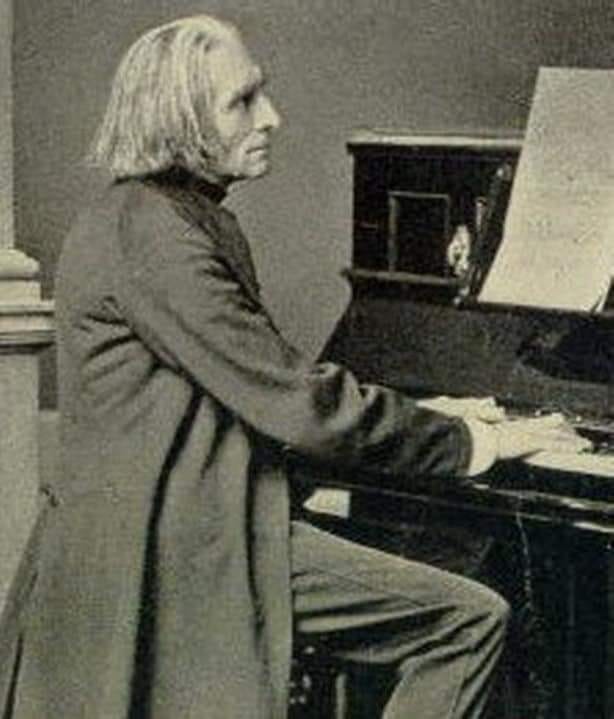
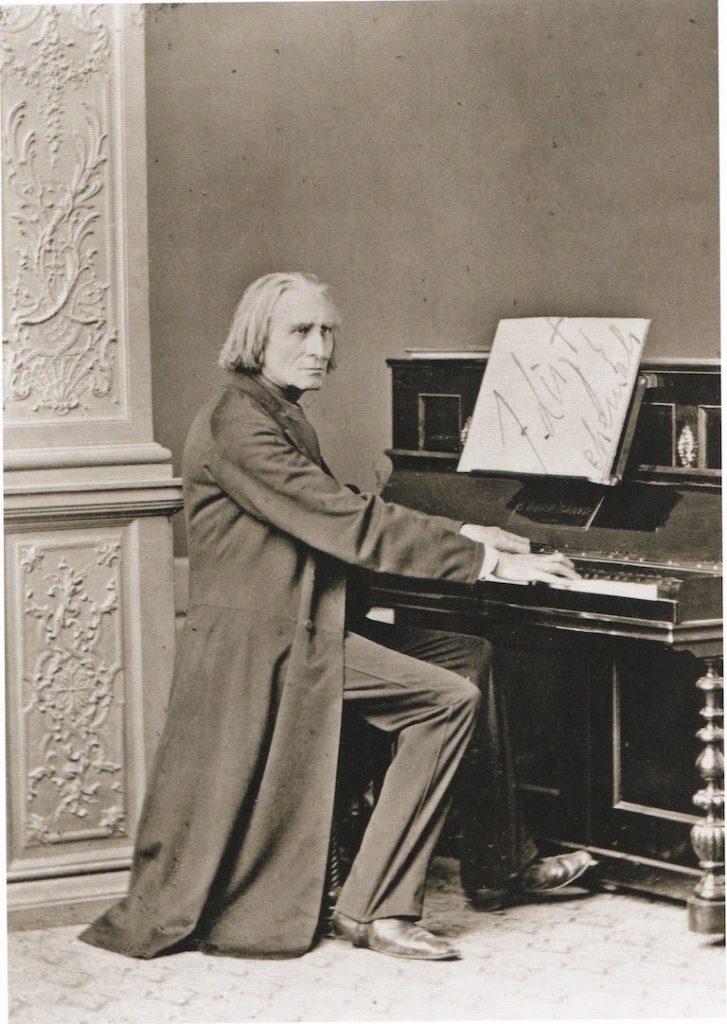
I couldn’t miss the occasion to post a new “story behind” about this picture. This famous photograph is often used to represent Liszt. We can see him sitting at an upright piano. There was a series of pictures taken at the piano. We sometimes see one of these with Liszt’s signature on the score. Liszt was often signing pictures of him to give to his pupils and friends. He signed one of these directly on the score. Here is the picture in question.
This picture was taken in 1869 by Edgar Hanfstaengl, son of Franz Hanfstaengl, a Bavarian painter, lithographer, and photographer. A prominent lithographer in Dresden, Franz opened his photograph studio in Munich in 1853. He became court photographer, taking portraits of King Ludwig II, Otto von Bismarck and Empress Elisabeth of Austria. He also worked with many artistic figures, among which Liszt, Wagner and Clara Schumann. He was a frequent visitor of Liszt and took series of pictures of him in 1856, 1858, 1867. On November 12, 1868, he transferred his studio to his son Edgar, who took over. This photograph is from the August 1869 series.
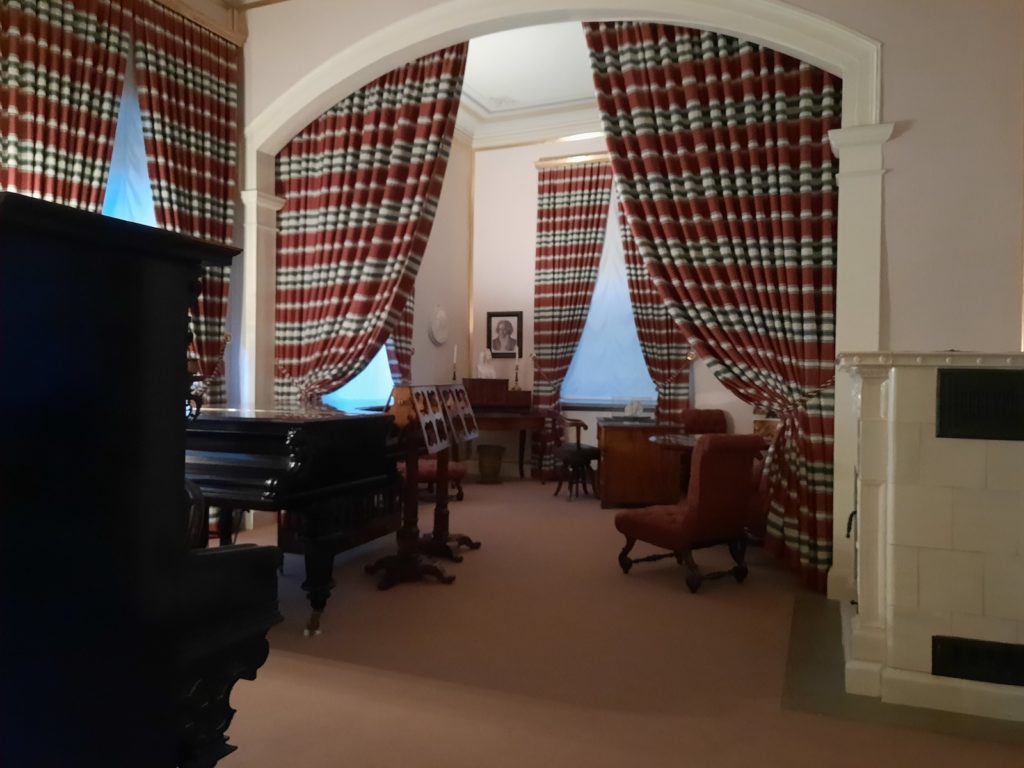
At the time this picture was taken, Liszt was already an Abbé (since 1865). 1869, the year of the picture, was the year he came back to Weimar. Liszt previously lived in Weimar from 1848 to 1861. He left when the Altenburg was closed, after his failed wedding with Carolyne Sayn-Wittgenstein. In 1869 his protector and long-time friend the Grand Duke Carl Alexander invited him back to Weimar and put at his disposal a house where he lived until the end of his life, famous for being the place where he gave his masterclasses: the Hofgärtnerei. Today, this Weimar building is known as the Liszt-Haus, or Liszt Museum. Everything inside the building has been kept as it was left in 1886 when Liszt died. I was there two weeks ago. Here is a picture of the salon, taken by me on August 16, 2021.
Published on Franz Liszt Group, on September 1st, 2021. If you want to know how the Story Behind series started, I give details in “Story Behind” Series #1″.
Original post:
Liszt 1846
Some group members asked for details about this picture, that is rarely published.
I replied: “I am still away for my European tour but as soon as I come back in September I will write a few “story behind” posts.”
Here is the story I posted after my trip regarding this picture.
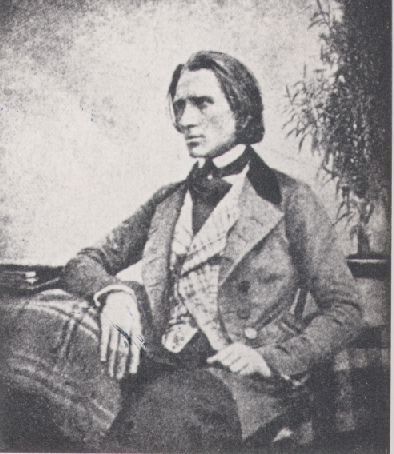
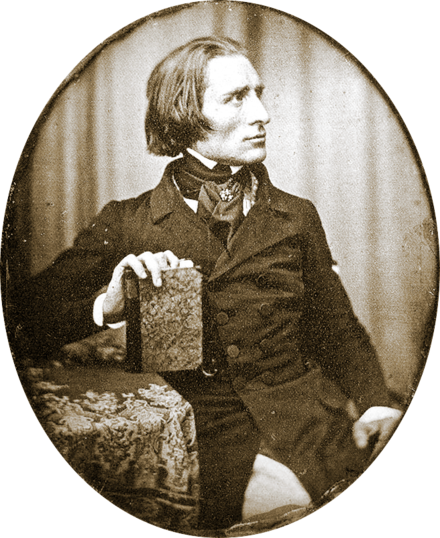
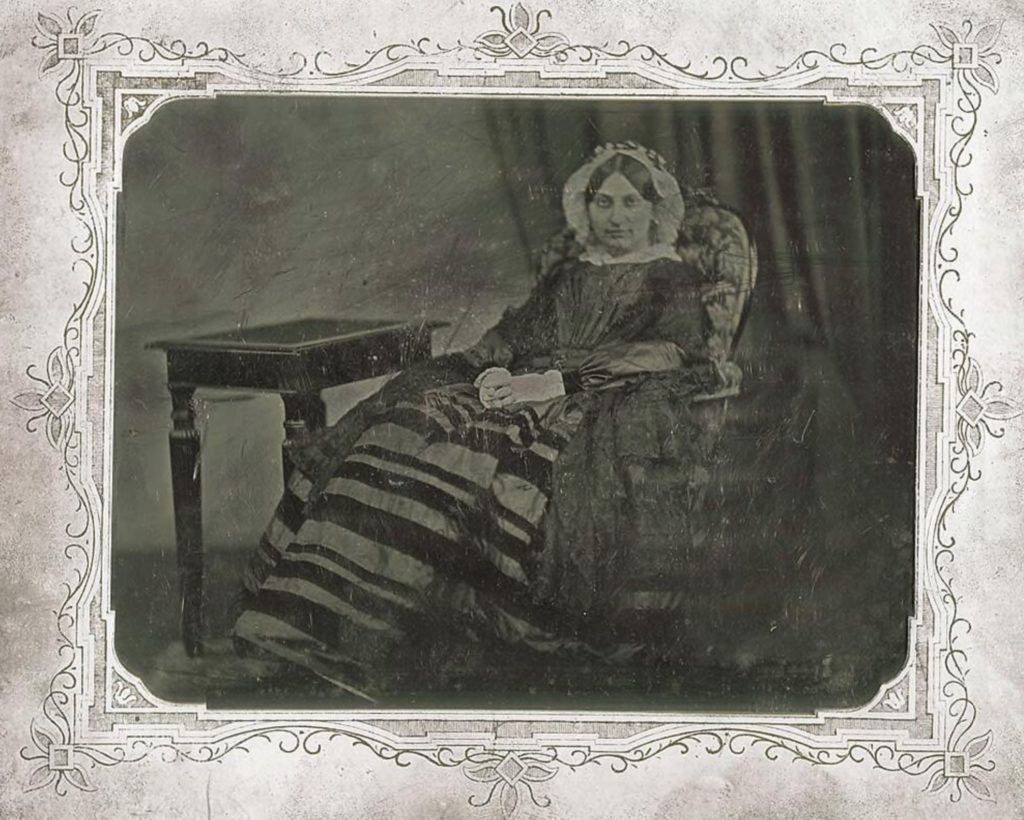
As promised, I tried to gather information about this picture to write a new “story behind” post. It took me longer than usual to write it. This picture of Liszt is a daguerreotype probably taken in 1846, or maybe in 1847. We don’t know for sure, and we don’t know the author of this specific daguerreotype. However, we can look at the existing daguerreotypes of Liszt and see how they are related.
As a reminder, the daguerreotype is an early photographic technique invented by Louis-Jacques-Mandé Daguerre.
I already wrote a “story behind” post about the very first one, taken in 1843. There were two daguerreotypes taken, one with the jacket closed, and one with the jacket open. The second one is sometimes dated 1841 but we know today that the one with the jacket open was taken after the 1843 one. It is possible that it was taken the same day as there are common elements that can be detected, such as the scarf Liszt is wearing with its specific clip, but also the way his glasses are attached and the curtain behind him. Here are the two pictures for reference.
For this specific one posted here, taken in 1846 or 1847, it might have been made in Paris by Louis-Auguste Bisson, who also took a recently (2017) discovered daguerreotype of Chopin in 1847.
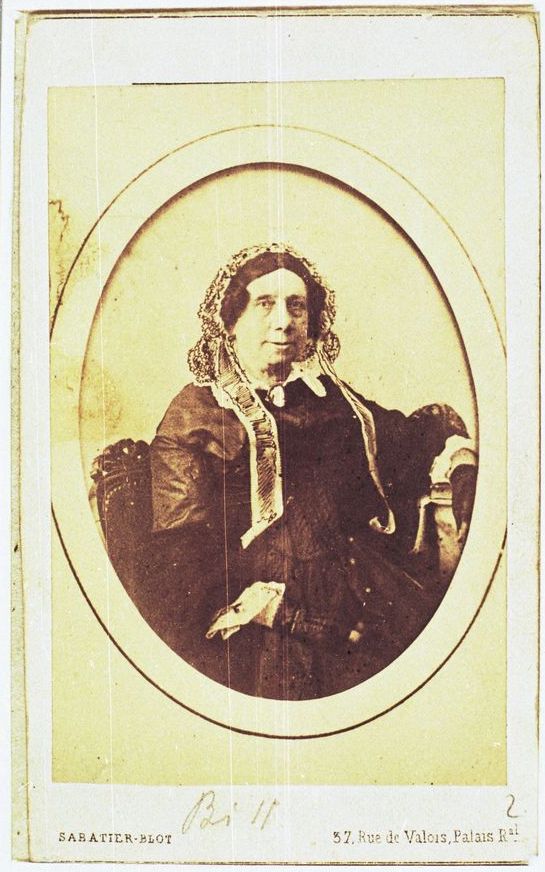
It is also possible that it was taken by Jean-Baptiste Sabatier-Blot who later took a picture of Anna Liszt, the composer’s mother, in Paris in 1860. Daguerreotypes were already out of fashion but there might have been an earlier connection between Liszt and Sabatier-Blot.
I looked at possible relationships between Liszt and other photographers specialized in daguerreotypes such as the Natterer brothers in Vienna, and Adolphe Legros and Eduard Vaillat in Paris, but I didn’t find any. I also looked at the photographers’ ateliers to see if I could recognize the furniture or tablecloth in some other pictures, but since the camera was often taken out of the atelier and brought to people’s homes, it is plausible that this 1846-47 picture was taken in Liszt’s lodging.
There is still another option. Liszt was still touring Europe in 1846 and 1847. He met Princess Carolyne zu Sayn-Wittgenstein in February 1847 in Kiev. In 1847, there was a daguerreotype of Princess Carolyne made by Joseph Weninger in Kiev (discovered and restored in 2014). It might be possible that this picture was made by the same photographer in Kiev since we don’t know exactly where it was taken. I like to imagine that they did it together 🙂
Published on Franz Liszt Group, on August 1, 2021. If you want to know how the Story Behind series started, I give details in “Story Behind” Series #1″.
Original post (posted by me):
Yesterday (July 31) was the 135th birthday of Franz Liszt’s death. I wanted to mark the occasion with a new “story behind” post. At the beginning of June, I posted the story of the very first picture taken of Liszt, in 1843. Let me tell you the story of the very last picture taken, on July 19, 1886.
Thanks to Jim Penning and his very complete articles about Liszt’s last stay in Luxembourg, we know many details about these days and the last public concert given by Liszt. This is only a summary, but I thought a “story behind” about this picture was appropriate.
First of all, I wanted to clarify what picture of Liszt was actually the last one taken before he died. The last professional series of pictures were taken by Paul Nadar in his studio in Paris, in May 1886. It includes a very touching and quiet portrait of Liszt smiling. Earlier the same month, Wilhelm Benque, another photographer based in Paris, also took a series of pictures but the last series was Nadar’s.
We often forget that another picture was taken after Nadar’s but this one was not a portrait, it was a group picture taken by Louis Held, a frequent photographer in Liszt’s house in 1884 and 1885. The group picture was taken on June 6th, 1886, when Liszt attended the Tonkünstler-Versammlung (Musicians Congress) in Sondershausen. The picture shows Liszt in the front row, surrounded by a large assembly of colleagues and pupils.
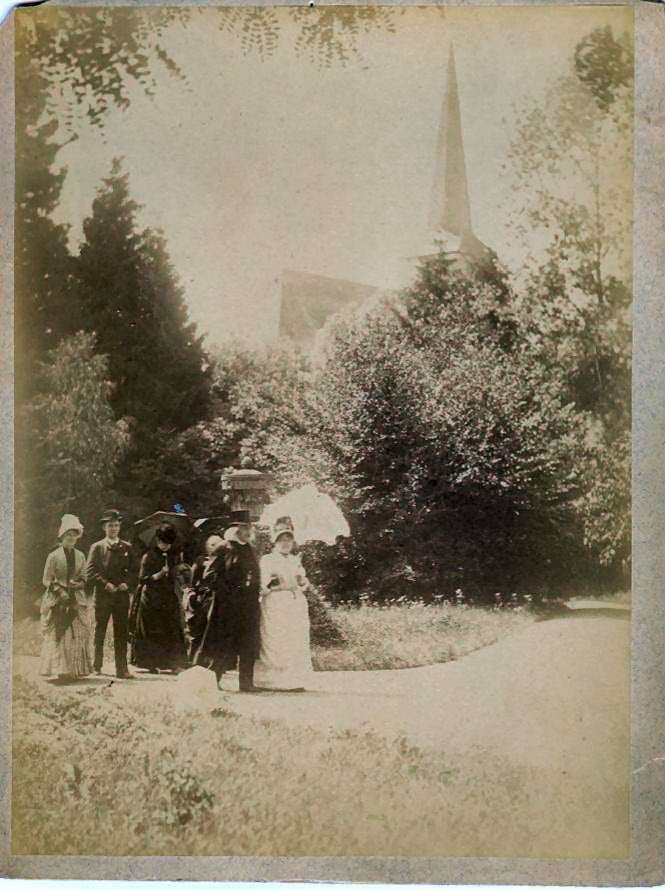
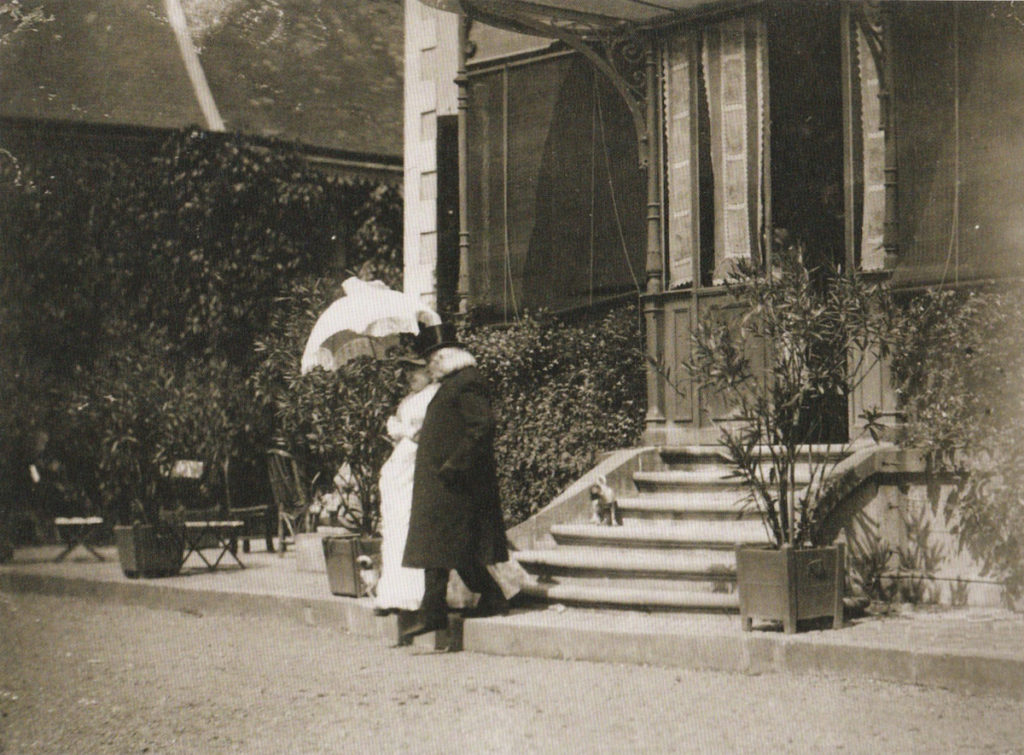
Now, it is not very well known that there were two other pictures made of Liszt before he died, in Luxembourg. These were taken on July 19, 1886, by an amateur photographer called Maisy Wolff, at Coplach Castle, the domain of his friends Mihály and Cécile Munkácsy. There are a few particularities about these pictures. First, it is the only series of pictures where we can see Liszt wearing a cylinder hat. Second, they were not taken in a studio but during an outside photo shooting, meaning that Maisy Wolff took the time to set the camera and prepare herself, probably aware of the importance of the opportunity to photograph the Master. Third, it is often believed that there was only one picture, as there is usually only one that is shared: it represents Liszt holding the arm of Cécile Munkácsy, walking down the steps in front of the castle, on their way to the Luxembourg Casino concert, where he performed for the last time in front of an audience (see the account of Liszt’s last journey in Luxembourg in Jim Penning’s articles).
This is where the story behind this series of pictures gets interesting. In reality, there were two pictures, and the one I post here is the very last one to be taken of Liszt. It represents him, still at the arm of Cécile Munkácsy, surrounded by a group of people. Remember the amount of time it was taking to set a camera and prepare for the perfect shot. This was a difficult exercise and one needed to be quick to complete the task. It was mentioned in an earlier “story behind” that it took Louis Held close to one minute just to capture the picture of Liszt at his writing desk in Weimar. I imagine Mrs Wolff running from the bottom of the stairs to further in the alley, setting her camera, and waiting for Liszt to walk in front of her. Anyway, she did it, and this is the picture. Interestingly, it is rarely presented in its entirety. A version zoomed only on Liszt and Cécile Munkácsy can be found, but it is not frequently posted as the zoomed version is blurry.
I was unable to identify with certainty the four people walking behind Liszt. Of course, it is almost impossible to identify the two ladies on the right, one being hidden behind Liszt’s back, and the other looking down. I assume the young man is Bernhard Stavenhagen, who was accompanying the Master and acting as secretary during his trip to Luxembourg. I don’t know who the young woman is. Here is an excerpt of Liszt’s letter to Olga von Meyendorff on Monday July 12, 1886: “We are usually about ten at table: the father and mother of Mme Munkácsy, Viscount de Suse and his wife, and two agreeable young ladies, pleasant friends of the lady of the house.” The picture was taken 7 days later so we can imagine that the Viscount de Suse and his wife were visiting but not necessarily present a week later, but maybe the two ladies are surrounding Stavenhagen, and maybe the person behind Liszt, who seems to have white hair, is Cécile Munkácsy’s mother. These are only assumptions of course. They probably travelled all together to the concert, so if anyone knows more about the group who attended the concert with Liszt, apart from Stavenhagen and the Munkácsy couple, tell us 🙂
Published on Franz Liszt Group, on July 27, 2021. If you want to know how the Story Behind series started, I give details in “Story Behind” Series #1″.
Original post:
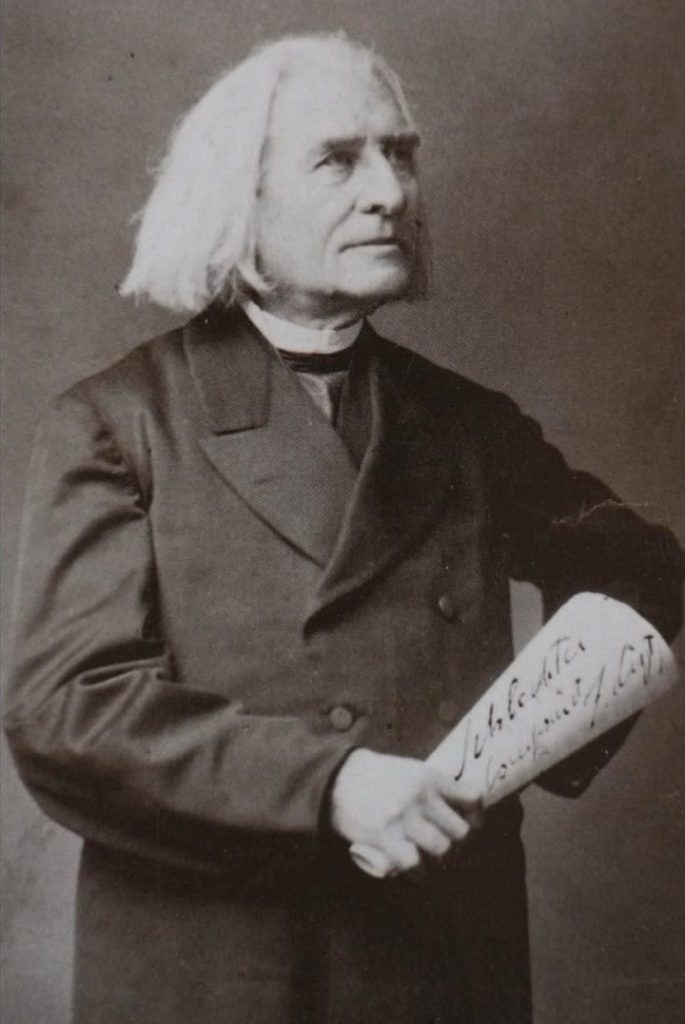
On this little-known photograph of himself, Liszt wrote: “Schlechter Componist” (a bad composer). How ironic!
Story behind the picture:
Ok, you all know me now and you know I love this kind of challenge 🙂 The term “little-known” triggers something in me. So I had to look at the story behind the picture 🙂 And here it is.
This picture was taken in Freiburg im Breisgau in May 1881. Liszt was on his way back from Hungary (where he just visited his birthplace in Raiding) to Weimar and decided to stop in several cities where his work was performed. From April 29 to May 3, 1881, Liszt spent a few days in Freiburg im Breisgau where he attended a performance of his Christus given during the Musikfest (on April 25, a few days before, he had already attended another performance of Christus in Berlin, during a full Liszt program concert conducted by Hans von Bülow). During his stay in Freiburg, he stopped in the studio of the photographer Heinrich von Langsdorff, which was just across from the train station. I have another picture from the same collection, with the same score in the hand. But I like this one better. And yes, I totally agree with [participant*], he had a great sense of humour 🙂 Keep posting pictures, friends, and I will give you the story 🙂 (at least I will try). Although I will be away during August so I will probably catch up in September.
* someone commented: “He had a great sense of humor, something unique.”
Note: after I posted this story, someone from the group contacted me and asked for the picture I have. We had a quick conversation about the joy of being a musicologist and being able to dig into music history to find little-known pictures of this kind.
Published on Franz Liszt Group, on July 25, 2021. If you want to know how the Story Behind series started, I give details in “Story Behind” Series #1″.
Original post:
Liszt portrait at the National Library of Paris
Story behind the picture:
Here is the story behind this portrait. This is another picture taken by Louis Held. It was taken in 1883 in his studio, 16 Schillerstraße, in Weimar. I attach to this post another picture that was taken the same day. I already talked a lot about Louis Held, who was one of the most important photographers of the time. He moved in Weimar and opened his studio on April 1st, 1882. We owe him a lot of group pictures with Liszt’s students, his friends, his colleagues… He was the one who photographed him sitting on his writing desk in his living room in Weimar, that was posted in June on this group (I wrote a “story behind” about it). During these years, when most of his colleagues were using conventional studio photography, Held was one of the early photographers to take pictures of subjects in their houses or their gardens. Years after years he improved his technique and found a way to take shots more quickly, although in 1884 Lachmund reported that the famous picture at the writing desk forced Liszt to sit still for one minute. But the pictures with his students are important sources today. The last pictures of Liszt and his students in the Hofgärtnerei were taken by Held in July 1885. In 1886 Held moved to Marienstraße 1, only a few houses away from the Hofgärtnerei. Unfortunately, he didn’t have the time to take more pictures of Liszt this fatal year of his death. Later Held developed one of the early video cameras, and his daughter continued his business after he retired.
Published on the Tibor Szasz Forum for Pianists page, on July 18, 2021. If you want to know how the Story Behind series started, I give details in “Story Behind” Series #1″.
Original post:
Tibor Szasz posted: Liszt – a stunning presence!
Story behind the picture:
Diane Kolin:
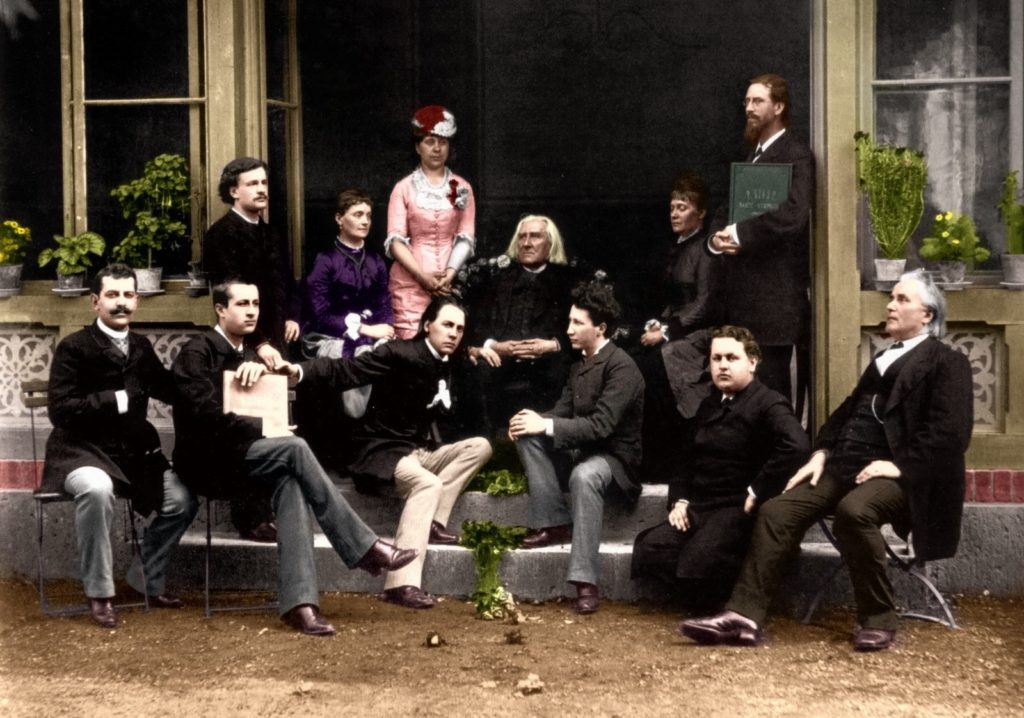
This photo is part of the series of pictures taken by Louis Held in Weimar in January 1884. A few months later, from May 23 to 28, 1884, Held was the official photographer of the Tonkünstlerversammlung (Music Society Conference) in Weimar. It was the 25th anniversary of the Allgemeine Deutsche Musikverein, and Liszt was the honorary president. Of course, many of his students and friends appear on this picture. A few days later, in June 1884, Held took the famous picture of Liszt sitting at his writing desk in his living room. In October 1884, Held took the famous group picture of Liszt surrounded by his students, that was taken on the occasion of his birthday. Someone made a colorized version of this picture that I quite like. I am adding the picture to this post.
Published on the Tibor Szasz Forum for Pianists page, on July 8, 2021. If you want to know how the Story Behind series started, I give details in “Story Behind” Series #1″.
Original post:
Tibor Szasz posted: A little known smile 🙂
Story behind the picture and the quote, and conversation:
Diane Kolin
1886 in Paris 😉 I can write a “story behind” on this picture if you want 🙂
Tibor Szasz
Diane Kolin You are welcome to do so. But are you aware who has the original photo? The information is in one on the comments on my Forum, I believe.
Here is the information: “Tibor, sorry to delay with my response. I remember this large photograph (approximately 2×3 feet in size) hanging in my piano teacher’s studio in Charleston, West Virginia during the mid-late 1960’s when I was a child. Her name was Beulah Duffield. Of course, I didn’t know who it was then. When I was 11, she moved away to Florida, but she and my mom stayed in touch with annual Christmas cards. Through my mom, my former teacher learned that I made piano my career and that Liszt was my composer of choice. Mrs. Duffield passed away sometime in the early 2000’s at age 99. She taught until shortly before her death. Several months after she died, I was contacted by her nephew (she had no children), who lived in New Jersey. He said I was named in her will as the beneficiary of this photograph. We met in Philadelphia and he delivered this portrait to me. According to him, it had been willed to Mrs. Duffield by her teacher, and to him by his teacher, who was a student of Liszt. He didn’t know the names of those people, nor did he know any dates regarding the acquisitions. I’ve never opened the portrait to see if there’s any writing on the inside, but it certainly looks to be old enough to be an original. Taking only that story, and the general look of the photo, I assume it to be very close to, if not an actual original photograph.”
That information is from Tim Shafer who currently owns the photo.
Diane Kolin
Tibor Szasz Thank you for this, really interesting! I will still send my story behind, as a complement 🙂
Diane Kolin
Here is my “story behind” post. It is longer than what I wanted to write initially, but I think it might be interesting to some of you, although some of my narrative is known among Liszt specialists. Regarding the story of the picture itself, maybe Tibor Szasz you can pass it on to Tim Schafer, as he might find the information useful if he wants to verify if his copy is the original picture. I post hereunder the copy of the picture I have, from the same series. It was taken in May 1886 by Wilhelm Benque, a French photographer of German origin, who owned the Benque & Co studio (in French, Benque et Compagnie) in Paris, located at 33 Rue Boissy-d’Anglas. They also had an exhibition gallery at 5 rue Royale. Benque photographed Liszt only two months before he died. During his stays in Paris, in the last months of his life, two photographers took pictures of him in March 1886, Benque and Paul Nadar. The latter did a series of pictures, that are still famous today (one of which is on my wall right now). Benque’s series is less known. Until I saw this one posted by Tibor Szasz, I knew only the existence of the one I attach to this post. We see Liszt in a very similar position, but with a more serious look. We recognize the wooden lions’ heads on the armrests of the chair. Also, look at the fingers of the right hand (on our left), which are also in the exact same position. Here is the context in which this series of pictures was taken. Liszt was busy during the last months of his life. He decided to go on a very tiring tour. 1886 started with his students, with whom he was celebrating New Year’s Eve. He is known to have said, when they were all together at midnight: “A bad year! It starts with a Friday and my birthday falls on a Friday too.” Liszt was superstitious, but unfortunately he was right. This year was bad. He was becoming blind because of a grey cataract, that got worse in the last months of his life. He was supposed to be operated in Halle in August, but he died just before. After New Year celebrations, he left for Rome on January 21st, then Budapest until March 11th, then Vienna until March 15th, then Liège for two days from March 16th to 18th, then Antwerp from 18th to 20th, and then Paris from March 20th to April 3rd. That’s when this picture was taken. I could conclude here but it would be like stopping just a few pages before the end of the book, so here is what happened next. After his first stay to Paris, he went to London (the last time he was there was in 1840) from March 3rd to April 18th, Antwerp again quickly on the 19th, then Brussels from April 20th to 27th, and Paris again from April 28th to May 15th. This last trip to Paris was a great success. His Legend of St Elisabeth was given at the Trocadero, with an audience of more than 7,000 people. He must have been totally exhausted when he came back to Weimar on May 17th. His loss of sight was so bothering that he went to see a specialist in Halle. He was diagnosed with severe cataract, and dropsy. As I mentioned previously, he was scheduled for surgery in August. Despite his increasing health issues, he continued to travel. From June 2nd to 6th, He attended the Tonkünstler-Versammlung (Musicians Congress) in Sondershausen. A group picture taken by Louis Held, who photographed Liszt and his students in 1884 et 1885 in Weimar, shows him in the front row. Within his close circle and family, he was very well surrounded by his students (his “children” as he called them), but it was very tense between him and his daughter Cosima since Wagner (who was Cosima’s husband and Liszt’s friend for many years) died in 1883. Since then, Cosima and Liszt barely talked to each other. Liszt’s attempts to contact her or visit her had remained unsuccessful. However, she needed support for the Bayreuth festival, which had financial difficulties, and visited him in Weimar to persuade him to come to the wedding of his granddaughter Daniela in July in Bayreuth, and act as an attractive figure for the festival. He accepted. He attended the wedding from July 1st to 4th, but after that, things didn’t go as initially planned. Liszt was not welcome in Cosima’s house anymore (when Wagner was still alive, he used to stay in Wahnfried, the name of the property) so he found accommodation just across the street, in Wahnfriedstrasse 9. He went to Coplach in Luxembourg, to visit his friend and Hungarian compatriot, the painter Mihály Munkácsy, from July 6th to 19th, after an exhausting trip. He was sick in bed for a few days after he arrived. The last time he touched a piano was in the Luxembourg Casino, where he had attended a concert. Pushed by Munkácsy’s wife, Cécile, he played three of his compositions: the first Liebesträume, Mélodies polonaises from Glanes de Woronince, and his 6th Soirée de Vienne. Then he went back to Bayreuth, as he had promised Cosima. He arrived on July 21st, very sick and feverish. He attended the performances of Parsifal on July 23rd and Tristan on the 25th. Then he went back to Wahnfriedstrasse 9, and became sicker and sicker. He died on the 31st. These 10 last days were described in detail in his pupil Lina Schmalhausen’s diary. Liszt’s end was very sad and lonely. This angers me a lot. Cosima forbade his pupils and friends to be at his side, and lied to the world, saying that her father died peacefully, surrounded by his loving family, with “Tristan” as a last word. What can be read in Lina’s diary is different, and has been confirmed by the testimonies of those who were present. Fortunately, all of us who love Liszt as a musician, a composer, a teacher, a musicologist, are his heirs today. I think we can count a few fortunate holders and transmitters of his legacy in this group. Let’s continue to carry it.
Tibor Szasz
Dear Diane Kolin: I will pass unto Tim Shafer your impressive documentation of which I have extracted the following part: “During his stays in Paris, in the last months of his life, two photographers took pictures of him in March 1886, Benque and Paul Nadar. The latter did a series of pictures, that are still famous today (one of which is on my wall right now). Benque’s series is less known. Until I saw this one posted by Tibor Szasz, I knew only the existence of the one I attach to this post. We see Liszt in a very similar position, but with a more serious look. We recognize the wooden lions’ heads on the armrests of the chair. Also, look at the fingers of the right hand (on our left), which are also in the exact same position.”
To me, the saddest part of Diane Kolin’s documentation is the following part: “Cosima forbade his pupils and friends to be at his [Liszt’s] side, and lied to the world, saying that her father died peacefully, surrounded by his loving family, with “Tristan” as a last word. What can be read in Lina’s diary is different, and has been confirmed by the testimonies of those who were present.”
Tim Shafer
What a wonderful context for these photos, Diane. Thank you, so much. I have promised Tibor to strive to get a higher quality reproduction of this photograph. I will renew my efforts.