

Category: Music and Disability

  • Toronto Finalist – French version of 3-min Thesis (3MT) / Ma Thèse en 180 secondes (MT180)

    Logo MT180 Acfas

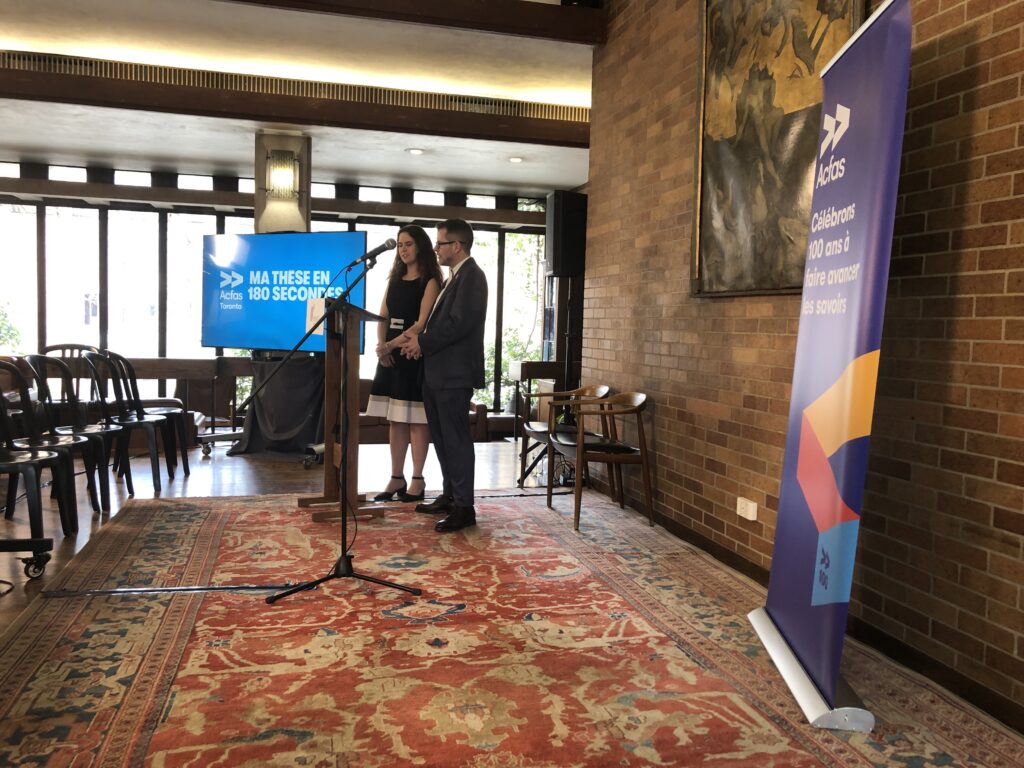
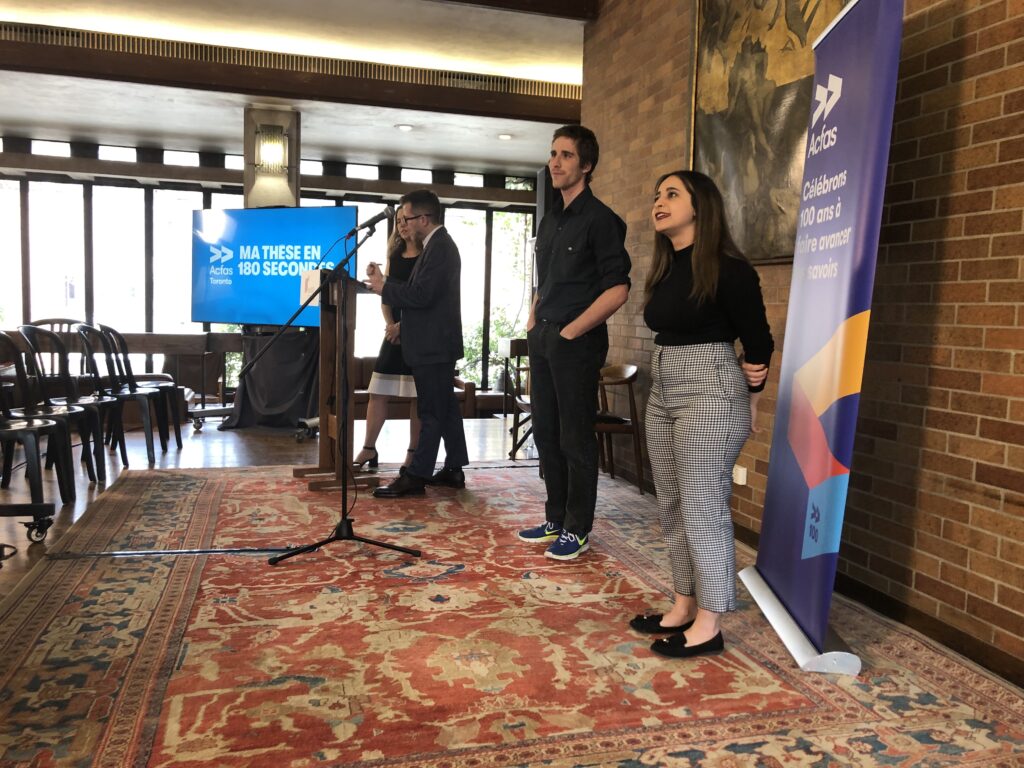
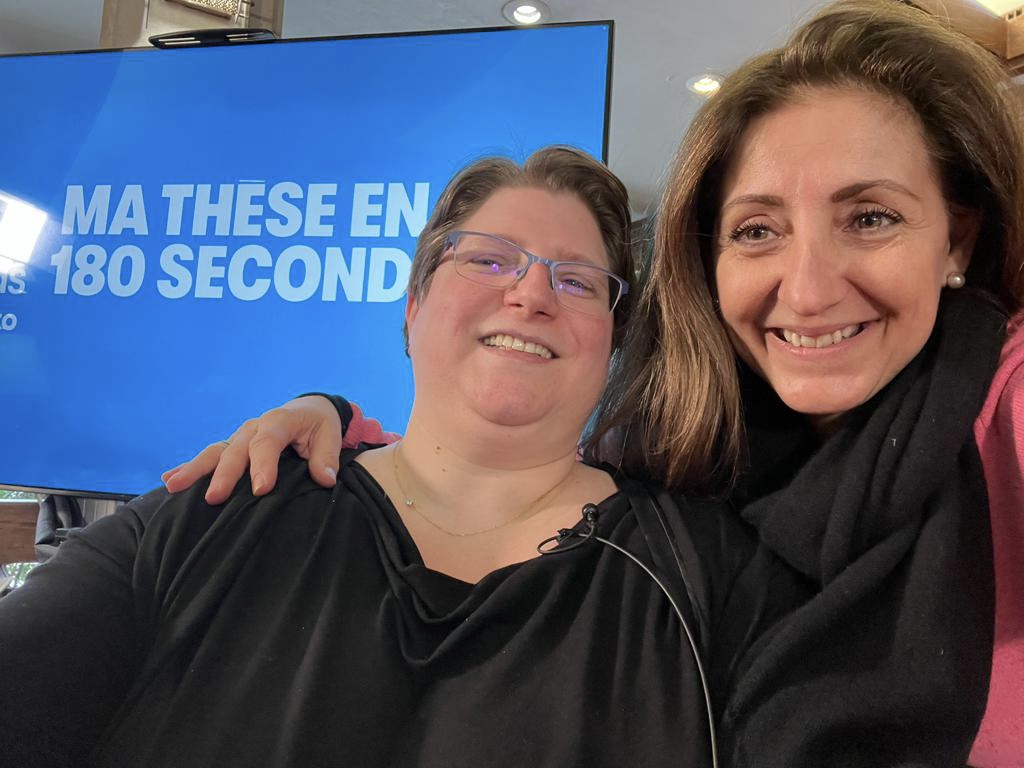
    The Three Minute Thesis (3MT) is an internationally recognized research communication competition. Participants have three minutes to deliver a compelling presentation on their thesis research for a general audience using a single, static slide. On March 21, 2023, I was among the participants of the Toronto final of the French version of 3MT, Ma Thèse en 180 secondes (MT180), at Massey College. In French, of course.

    Presenting a short three minutes version of a thesis is an interesting but complicated task: it is impossible to summarize a full thesis, so we need to choose an excerpt that makes sense to a broader audience who knows nothing about our specific topic. We also need to make sure not to use words that are understood only by experts in our respective domains. Fortunately, Acfas, the organizer of the event, provided several training sessions: how to prepare ourselves, how to write, how to be on stage, etc. It was very helpful.

    I presented three minutes of Critical Disability concepts and their applications to music education, with examples of accessibility workshops I gave in a music school. The competition itself was enjoyable. We were happy to be together, trying to manage our stress between participants. A few friends were supporting me in the audience.

    As a reward for all my efforts, I won the competition! I will attend the national final in Montreal on May 10, 2023. Wish me luck!

    An article in L’Express Toronto (in French) about the competition:
    https://l-express.ca/ma-these-en-180-secondes-direction-montreal-pour-diane-kolin/

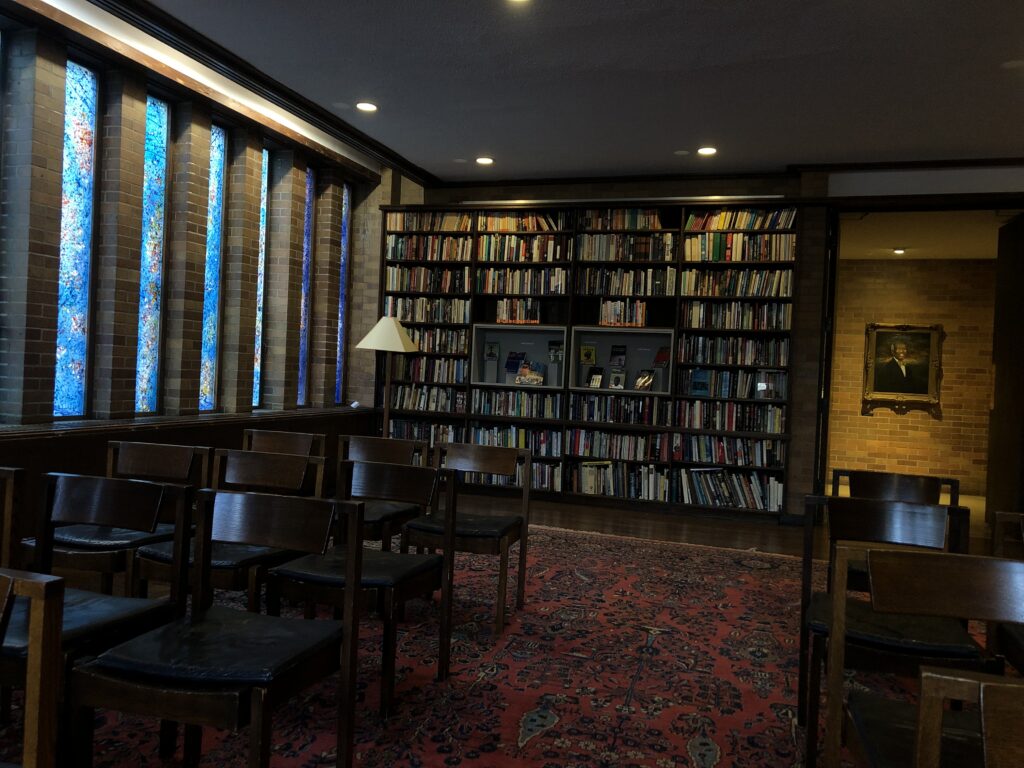
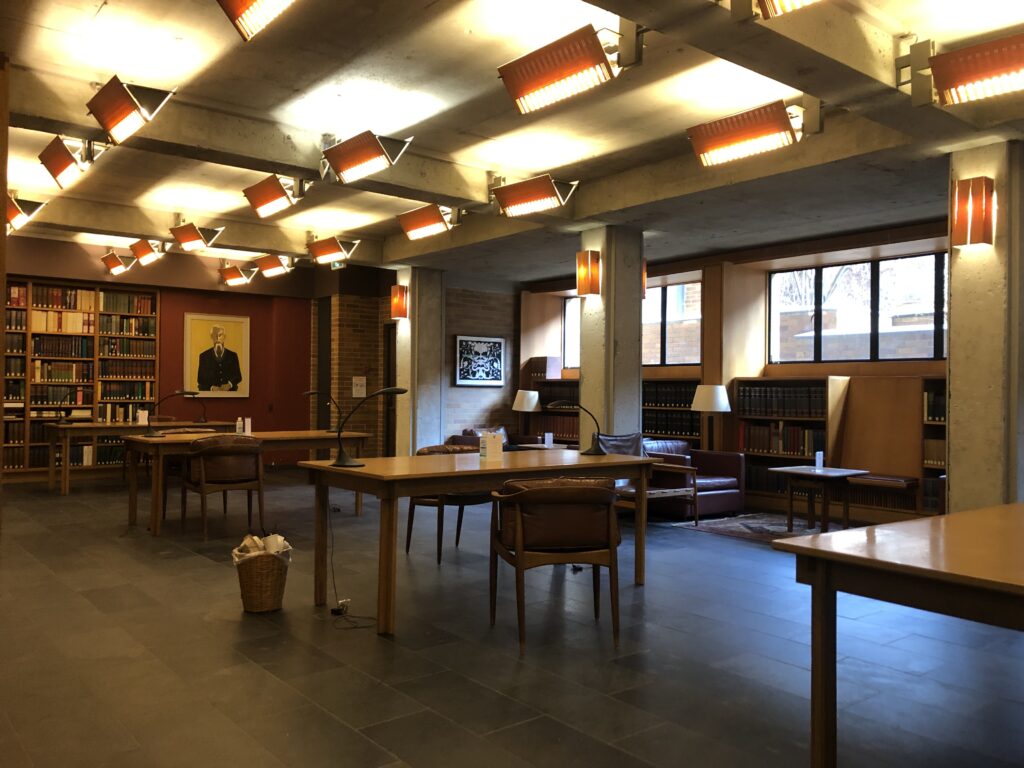
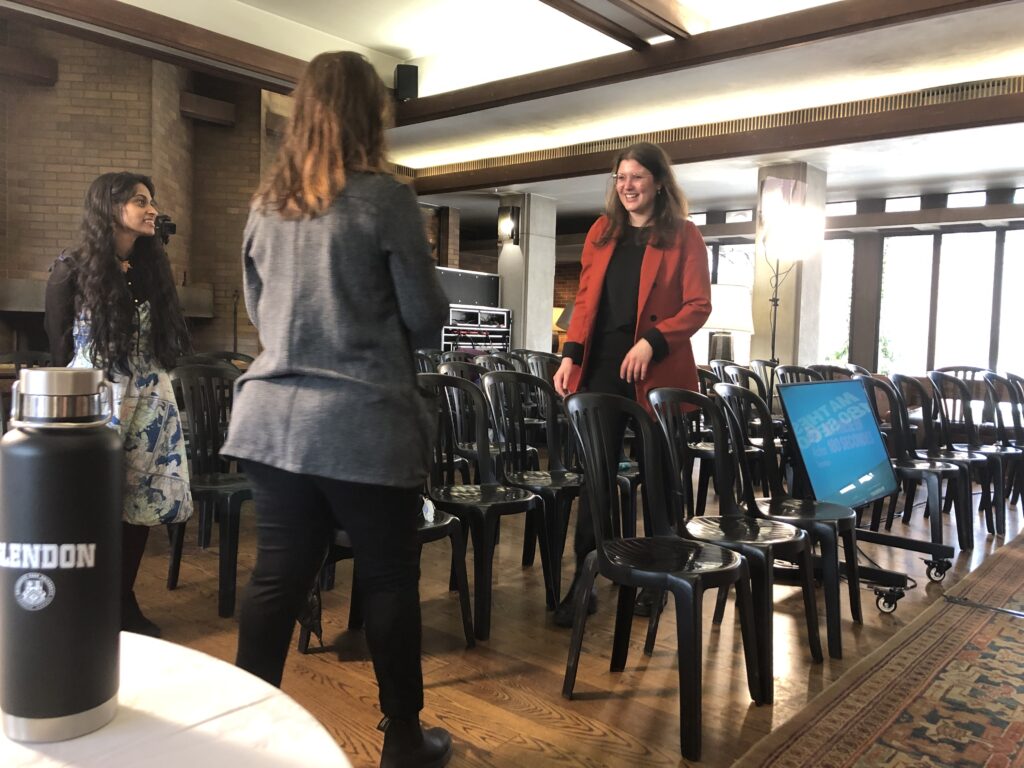
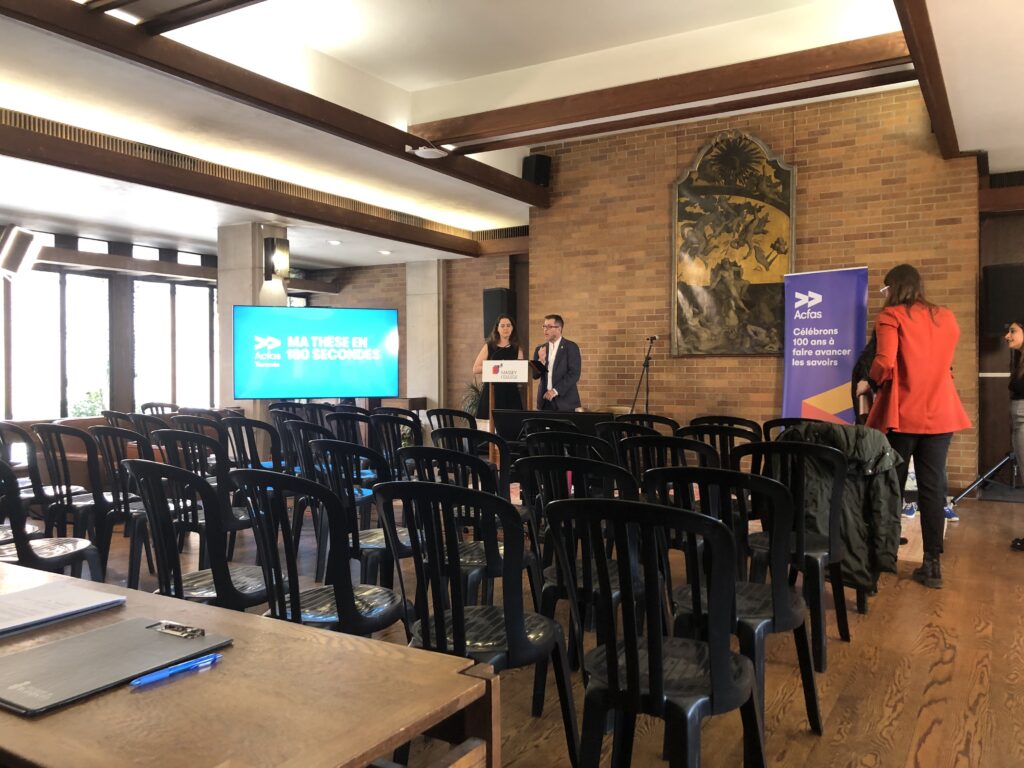
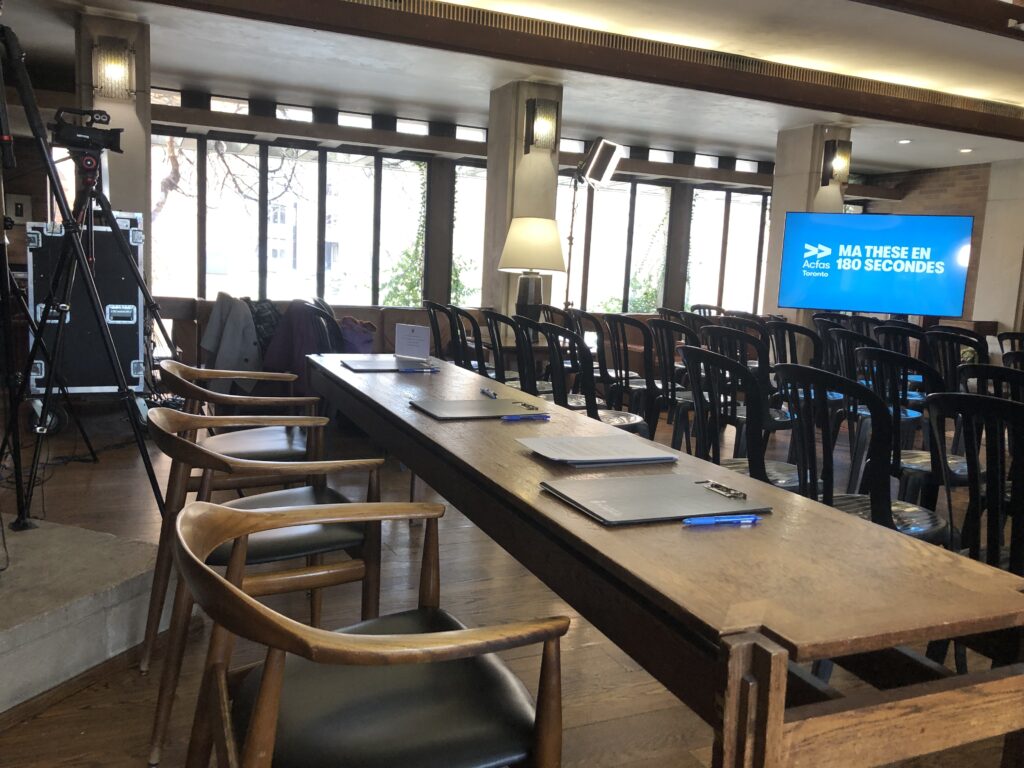
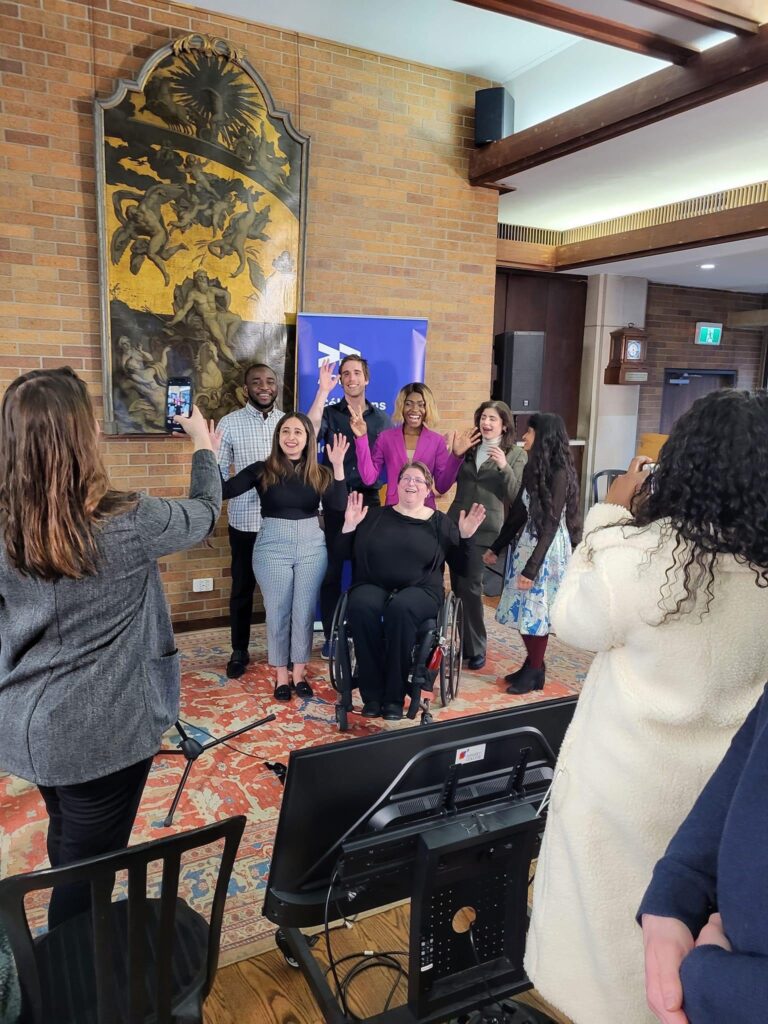
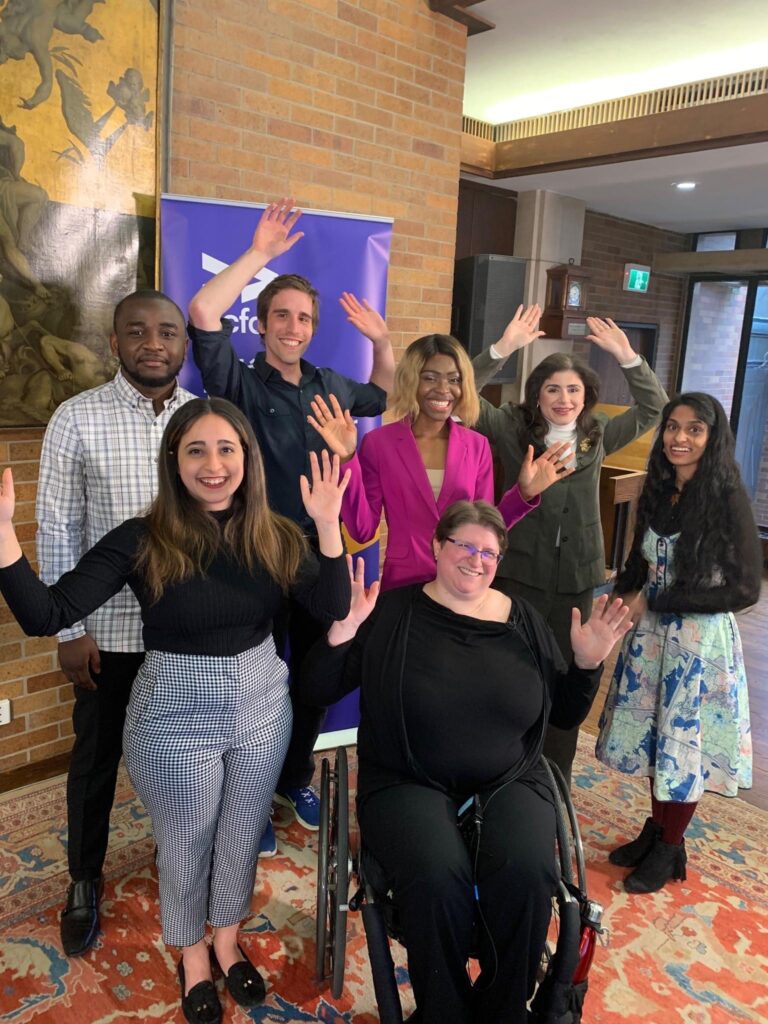
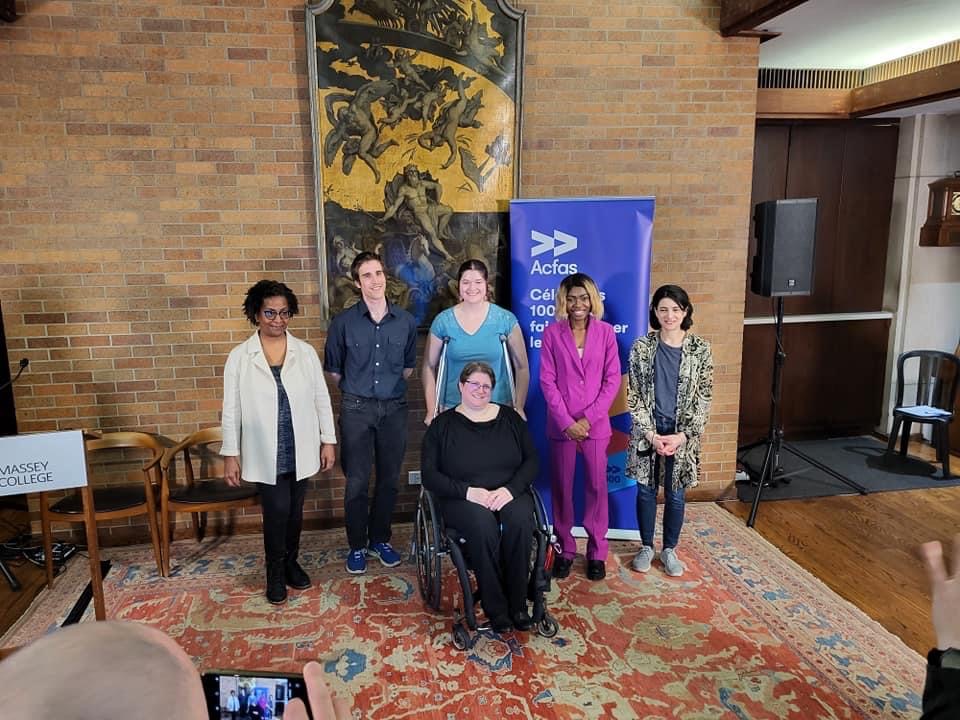
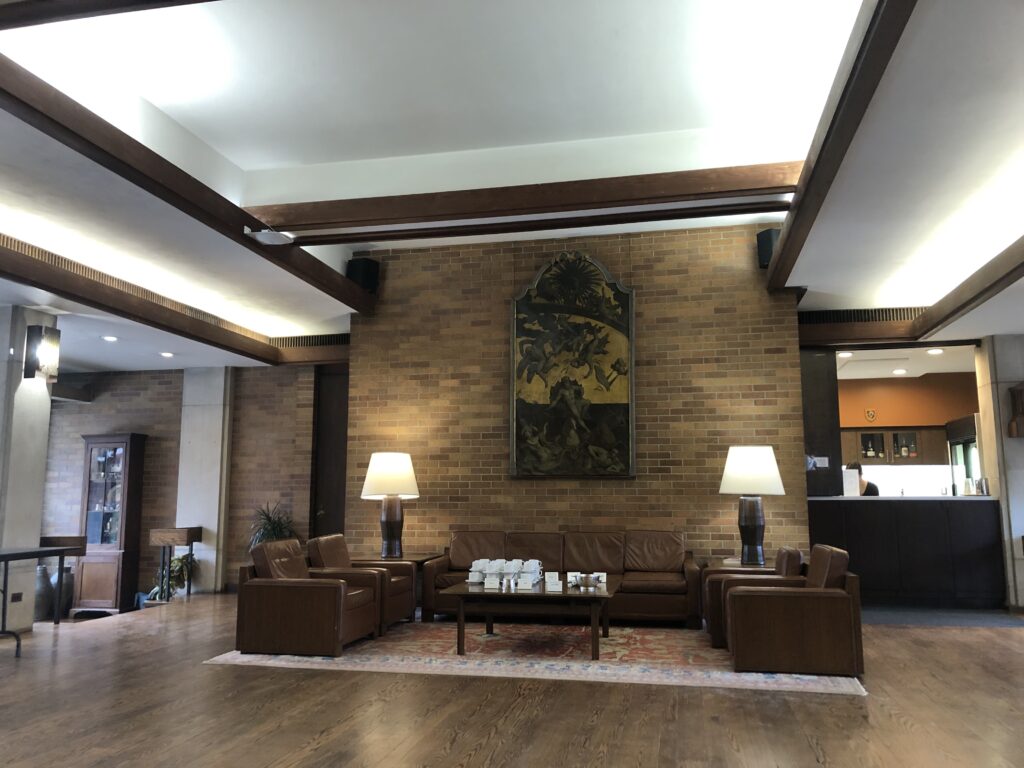
    Some pictures of the event:
  • Oral comprehensive examination – Public lecture: “Accessibility in music education: tools and techniques for music educators”

    Comprehensive exams are the last steps in a PhD student’s journey before being allowed to write a doctoral dissertation. I did my written comprehensive exam (a mini dissertation on a chosen topic agreed with the supervisory committee) in November about the impact of deafness on Ludwig van Beethoven’s piano sonata compositions. My oral comprehensive exam was on March 17, presenting a series of adaptive instruments and voice workshops I have organized in a music school, in relation to my research about professional musicians with disabilities. Though the written comprehensive exam is discussed privately between the supervisory committee and the student, the oral comprehensive exam is open to the public. It contains 1) a presentation part done by the student, 2) several rounds of questions from the committee, and 3) a decision of approval of the exam. Because it was attended by a fair number of people (via Zoom and in person), the committee decided to add an extra step and open the conversation to the audience for questions. My oral comprehensive exam was approved. I am now officially ABD (All But Dissertation), meaning that I am not a student anymore, but a candidate. I give myself two years to write the dissertation. I thank my committee for the time spent together, discussing both written and oral comp topics: Stephanie Martin, Amy Hillis, and Rachel da Silveira Gorman.

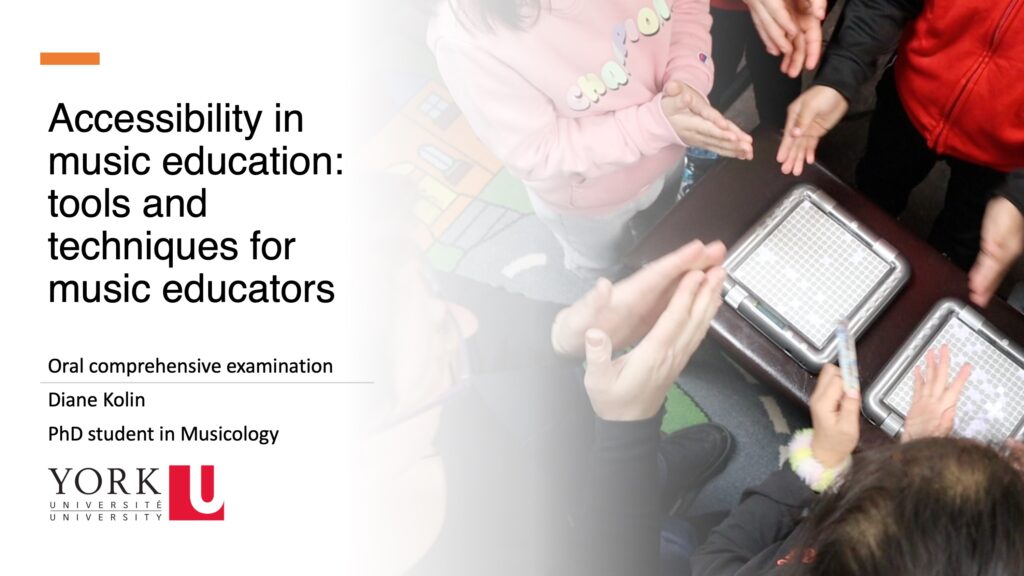
    More about the oral comprehensive exam. Here was my title slide:

    Title slide of my oral comp, saying "Accessibility in music education: tools and techniques for music educators." It also shows a picture of children's hands clapping a rhythm and an adaptive instrument.

    Abstract:

    “Education follows society,” as Michael L. Mark states in his chapter entitled “Music Education History and the Future” in the anthology “Music Education, Navigating the Future” (2015). In music education, the methodologies employed by the teachers are in constant evolution with our society to improve accessibility, diversity and inclusion in class. However, students with disabilities frequently face ableism and lack of support because of the absence of options available to them to include students with special needs in traditional classrooms. Working with professional musicians with disabilities, I have often discussed with them the challenges they faced to continue their musical studies. It is usually thanks to one individual (a teacher, a parent, a friend) who was thinking out of the box that it was possible for them to find the proper adaptations and teaching/learning methods. This implies that teachers keep an open mind and take into account the abilities of their students. As part of a project in partnership between York University and CMST (Community Music Schools of Toronto), I have proposed a series of adaptive instruments and voice workshops to introduce young music students (4 to 13 years old) to different learning experiences in the classroom. These workshops allow teachers to learn new tools and techniques which might be applied in the future, and students to discover other ways of performing and learning music, with ASL and Braille music, new technologies, and traditional instruments used in a non-traditional way. In my presentation, I will give an overview of these workshops and demonstrate how these new tools and techniques can help improve music education for students with all abilities.

  • York University Experiential Education (EE) Symposium 2023 – “Disability, music education, and adaptive workshops”

    Experiential Education Symposium logo. The image also shows a text that says: "Why Experiential Education?"

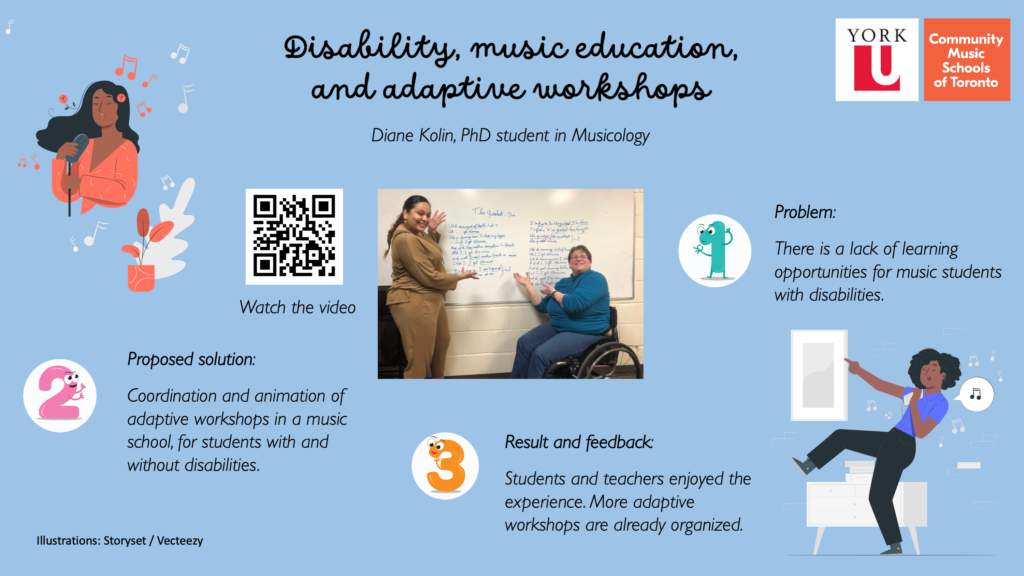
    The 2023 Experiential Education (EE) Symposium showcases experiential education at York University and celebrates the achievements of students and faculty who have participated in EE. I was invited to talk about my research on March 8, 2023. Since I am in the middle of the topic of accessibility workshops in music schools, I presented a short video (5 min) about my adaptive voice workshop at Community Music Schools of Toronto during the symposium, along with a poster giving more details about this experience.

    Poster showing a picture of our American Sign Language lyricist and myself, in front of a white board on which the lyrics of a song are written. The poster shows the three main points of my research and a QRcode leading to the video.

    The video can be seen below:

    Event website, program, and videos: https://www.yorku.ca/eesymposium/

  • Creating a new chapter about Music and Disability with students

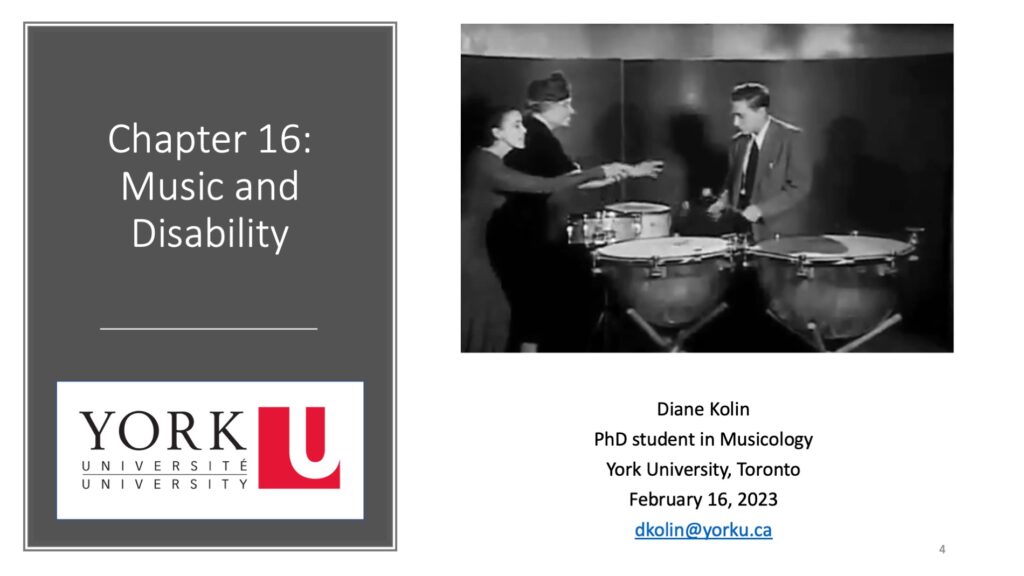
    As a guest lecturer to Dr. Judith Cohen’s class “The Musical Experience” for non-music major and minor undergraduate students at York University on February 16, 2023, I worked with the class to create an additional chapter called “Music and Disability” for their textbook. They work with the following book: Music: A Social Experience (3rd edition). Maybe we should suggest this additional chapter to Routledge?

    Title slide of our proposed chapter about Music and Disability, with a picture of Martha Graham and Helen Keller feeling the timpani.
  • York University – Disability activism in music – First-year PhD students

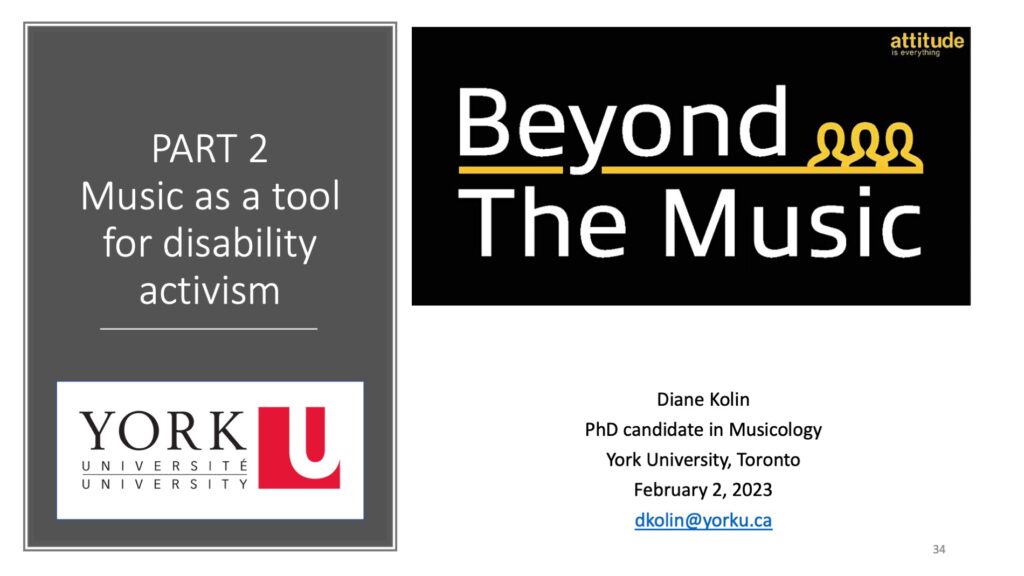
    Lecture at York University in Rob Bowman’s first-year PhD students class, on February 2nd, 2023. A two-hours lecture about several aspects of my research about disability and music.

    Title slide of the second part of my lecture called "Music as a tool for disability activism: Beyond the music"
  • University of Toronto – Guest in Rena Roussin’s “Music and Disability” course

    It was a privilege to meet my colleague Rena Roussin’s students in her “Music and Disability” course on January 24, 2023, at University of Toronto (U of T). I gave a lecture about strategies performers with disabilities apply to their music-making, along with obstacles they had to face while studying music.

  • CMST Talks – Accessibility in Music

    Community Music Schools of Toronto, the music school where I teach voice, regularly produces videos of interviews intended to increase musical and societal knowledge. The series called CMST Talks features guests discussing specific topics. I took part in the “Accessibility in Music” talk, recorded on November 24, 2022, hosted by Thompson Egbo-Egbo and produced by Jasper Gahunia. Two other guests, in relation to my overall research about disability and music in the professional music industry, have been interviewed for the occasion: Kris Haplin, MiMu gloves player, and Precious Perez, singer and VP of RAMPD (Recording Artists and Music Professionals with Disabilities).

    This episode of CMST Talks is the 15th of the series. All CMST Talks videos can be found here: https://www.youtube.com/playlist?list=PL-826uBf5h26NzsgRAwkPLgO8QbVkdGKW

  • AMS-SEM-SMT joint conference – NOLA 2022

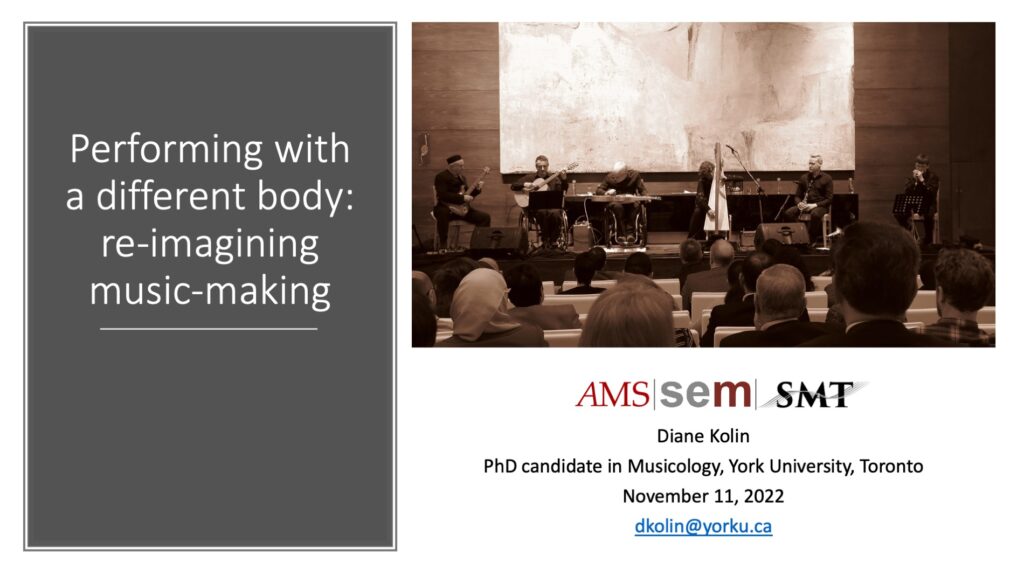
    New Orleans hosted the joint American Musicology Society, Society of Ethnomusicology, and Society of Music Theory conference, from November 9 to November 13, 2022. I presented a paper entitled “Performing with a different body: re-imagining music-making” on November 11. There were some good opportunities to connect with my colleagues working hard to build a better Disability Studies field with more music talks.

    Title slide of my presentation entitled "Performing with a different body: re-imagining music-making." It shows a picture of the Paraorchestra, a professional ensemble composed of musicians with and without disability.

    Abstract:

    How does someone without arms play French Horn? How does someone with bent arms play violin?  How do musicians with differently developed bodies make music? Like all musicians, they need a team of supporters. Their teams, however, also include instrument inventors and builders. In this paper, I explore the experience of three professional musicians who I have interviewed about their musical journeys, born without arms, with a different shape of body, or with a progressing disability. 

    Following Blake Howe’s study of the one-handed pianist Paul Wittgenstein (2010), I use social and cultural models of disability and mediation theory as a framework to examine the relationship between music-making, differently shaped or functioning bodies, and disability, leading the musicians to new instruments and practices. The concept of separation between disability and impairment emerged from the social model of disability (Barnes, 2012), from which the cultural model borrows its approach of disability pride (Mitchell & Snyder, 2012). Although disability pride has been adopted by musicians who consider that disability is part of their identity and should not be seen in negative ways assumed by our current society, the three musicians are differently affected by disability pride. I discuss how their disability led them to different directions, whether they consider it as the motor of their actions or as a simple fact that has little to do with their musicianship.  I use mediation theory (Prior, 2018) to discuss how new technology can reshape the conventional form of instruments. Based on the experience of these three musicians, I suggest that unconventional thinking and re-imagination of the confines of traditional music-making can open the profession of music to all, no matter what kind of bodies we are born with, and allow more inclusive musical performance practices.

    The conference was video recorded (it starts at 1’26”):

    https://youtu.be/xab6dwwWmeY?t=86
  • PODIUM 2022 – Choral singing, abilities and possibilities: how to accessibilize your choir

    PODIUM is a Canadian festival and conference about choral singing co-presented by Choral Canada and Choirs Ontario. The event is bilingual (French and English) and occurs every two years in a different city in Canada. It is attended mostly by composers, choir directors and singers. This year, PODIUM 2022 was in Toronto, from May 19th to May 23rd. It was a very lively and interesting event, allowing networking and interesting conversations about many topics.

    I was involved in two aspects of the event. First of all the organizers asked me to assess the accessibility of the different venues of the festival in order to create accessibility guides for visitors with disabilities. Eight different guides were created, in French and in English, giving all kinds of details about the accessibility of the performance venues and the conference venue in Downtown Toronto.

    I was also selected to give a presentation about the accessibility of choirs and orchestras, here focused on singers. It was entirely bilingual. It contained advice on what to consider when the choir opens up to singers with disabilities, in the optic of breaking the assumptions that it is difficult. I also gave illustrations of real cases that can be encountered, and ideas to solve these issues. After the presentation, there was a Q&A that allowed the audience to not only ask questions but also share their own stories of challenges and victories regarding accessibility in choirs. It was a very interesting exchange.

    This presentation was recorded but the content is private for now. I will probably be able to share the video in the future.

    The next PODIUM conference will be held in Montreal in 2024.

  • Vibrations, deafness and music: from Ludwig van Beethoven to Evelyn Glennie (video)

    This presentation is based on the one given at York University, Toronto, Canada, on January 14th, 2022, mentioned in this post. It is in English and contains embedded subtitles.

    How does someone deaf hear music? Is there another approach to sound when the ears are not working? In this paper, based on the assumption that deafness is incompatible with sound, thus with music, I explore the interconnections between hearing impairments and music-making, from the nineteenth century to today. Through the journey of musicians with hearing issues, I assert that the multiple tools and techniques developed for and by these musicians have transformed society’s assumptions about disability and music. Through the study of the history of devices related to hearing loss, I examine the progression of the technologies available, and the choices of using these technologies made by deaf musicians.

    I would like to express my thanks to those who helped me with their feedback, in particular Christina Quilico, Tom Beghin and Robin Wallace.